
Alice 方律

Ba (Hons) Interior & Environment Design - 2019 Cohort

My Design Philosophy

My values are equality, protection and freedom. What I want to convey is equality of gender, race and everyone. In my design, I want to show my attention and help people of unequal status, such as women, children, disabled people and the elderly. While conservation refers to protecting nature, I will use more environmentally friendly materials, reduce energy consumption and not use techniques that will damage the local environment. And freedom refers to the fact that I want to be more courageous in expressing my ideas in my design.

Honours Project - Community Integration

Project Brief

Recovery

  • To provide more public space

  •  Help the retired residents relearn and catch up 

  • To draw attention to the plight of pensioners

  • To help the retired find new jobs 

  • To promote cultural exchanges between the elderly and the young

Idea Generation & Design Process

Inspiration

Form

Connect

Combine

Inspiration

Form

Connect

Combine

Slider image

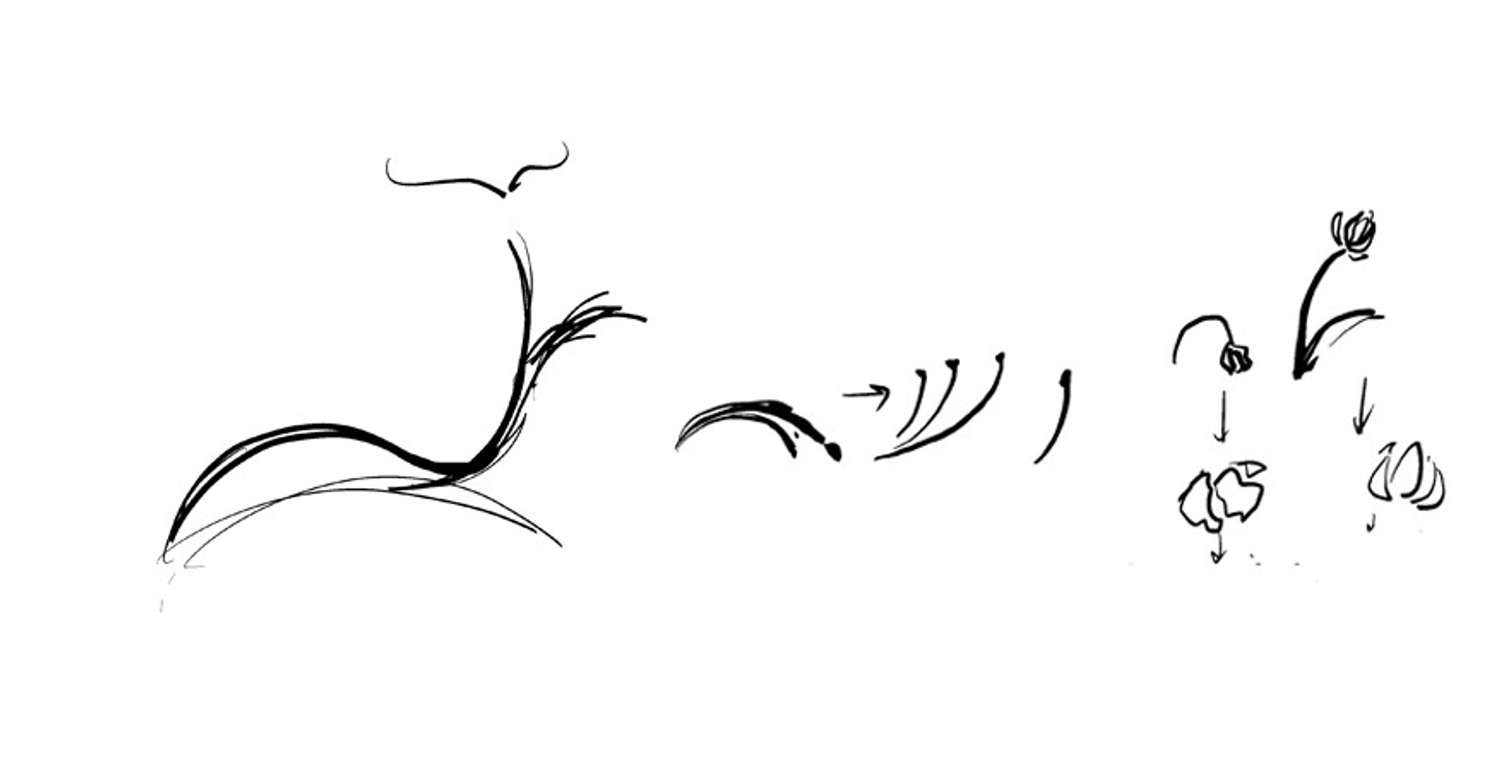
Inspiration of recovery

Since my inspiration is "recovery", which is also related to the growth process of plants, I studied the recovery process of plants. Since the roots of plants are not completely hard, I summarized this dynamic process through curves.

Slider image

Form and arch of plants

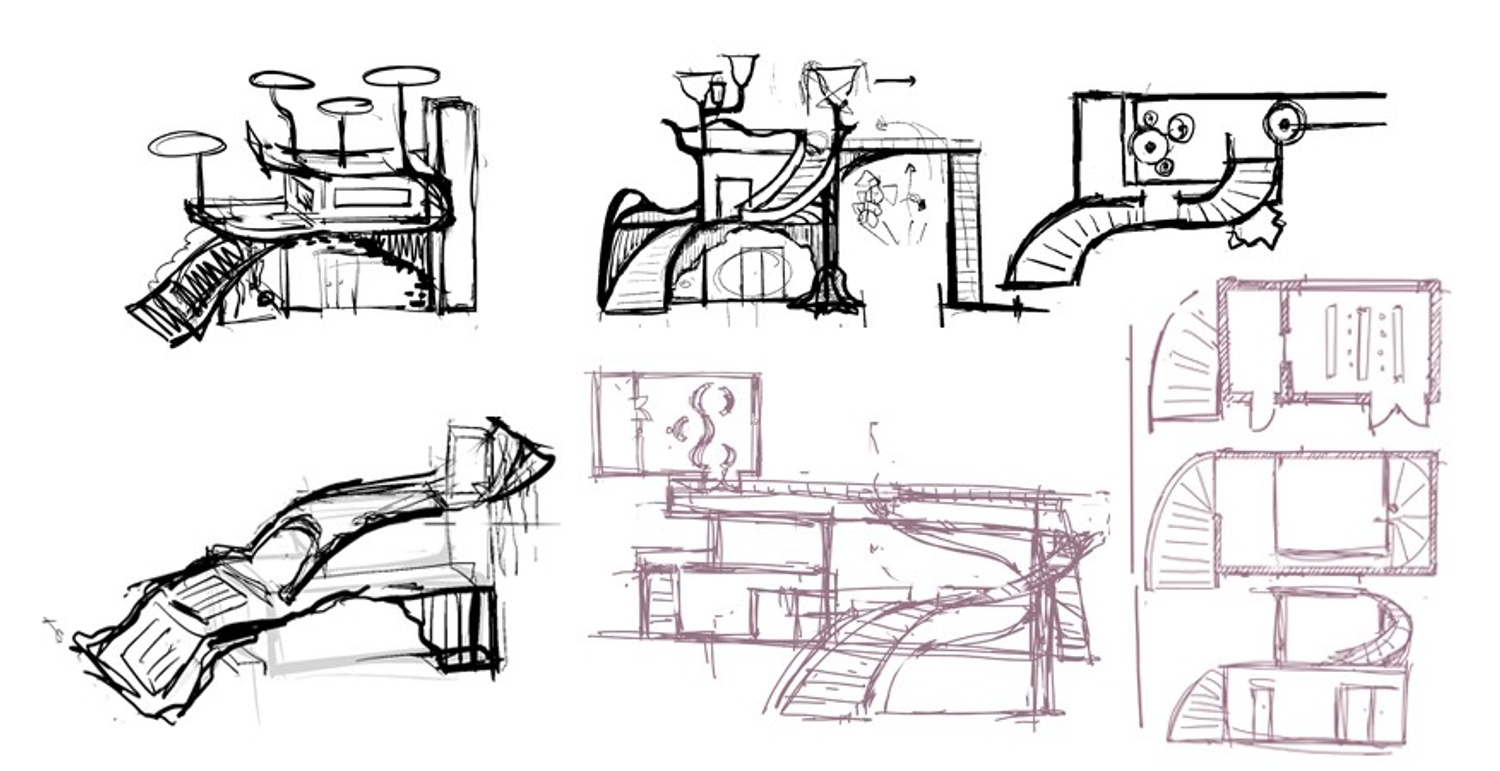
Before summarising the recovery curve law, my architectural design ideas were mainly related to the form and arc of plants, in which I tried to design a water-pipe in the style of plants to collect rainwater.

Slider image

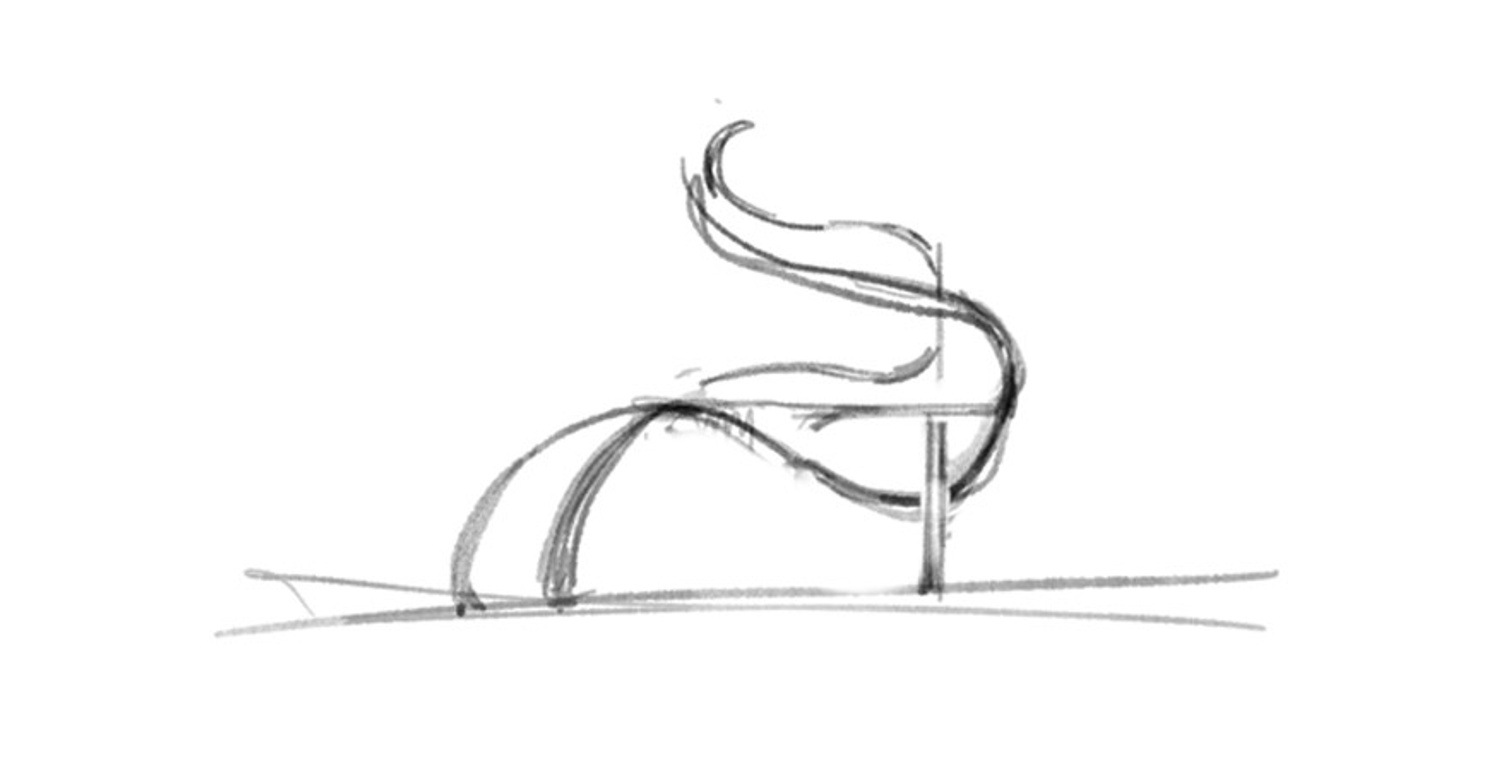
Connecting to the architecture

After I summed up the recovery dynamics of plants, I tried to connect the curve dynamics with architecture. The process of recovery is that the curve initially rises upward, then bends downward to a certain extent and rises again.

Slider image

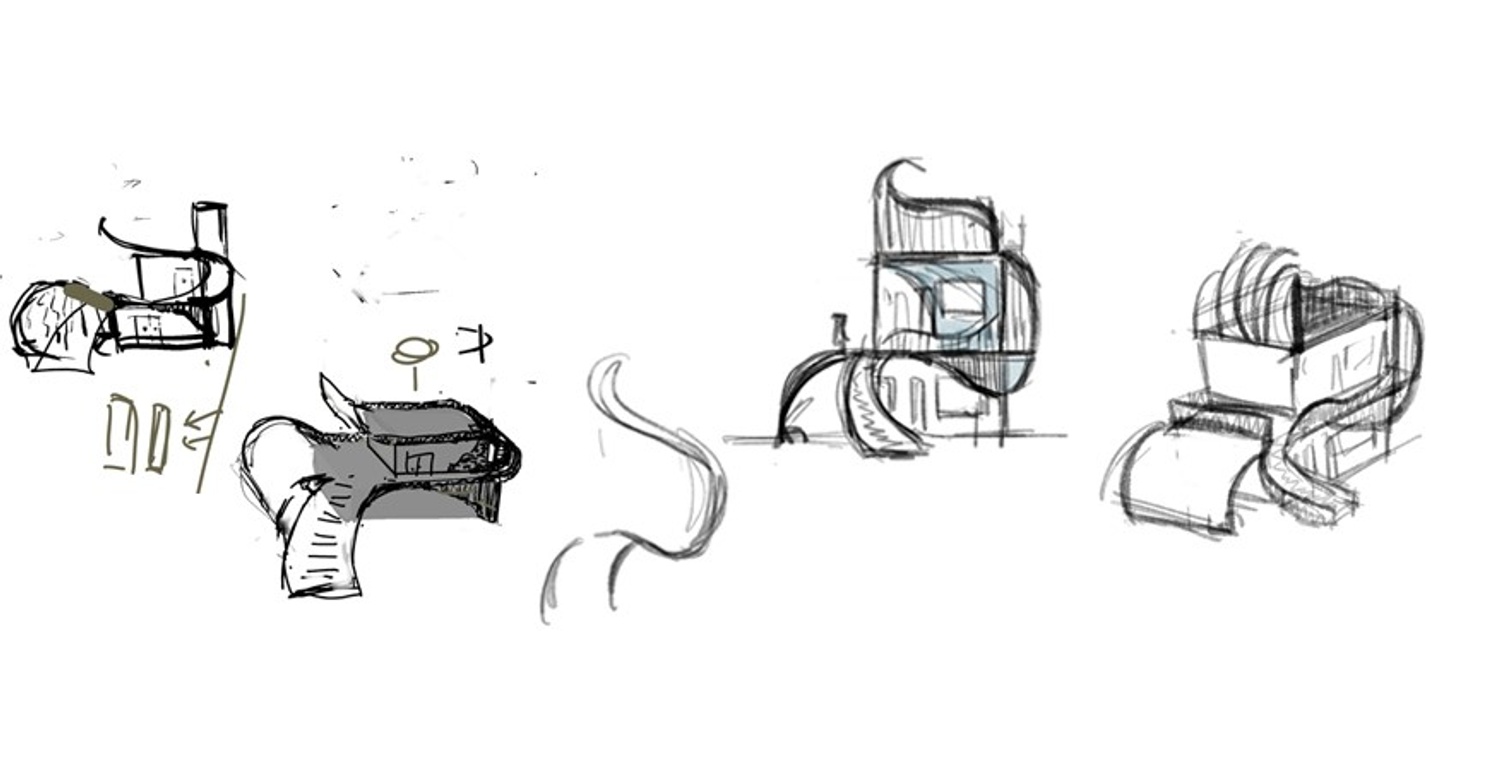
Combining the building and curves

After preliminarily designed the outline frame of the building, I combined the curve with the building facilities, for example, by bending the curvature of the stairs to combine the curve with the building through the stairs and set the balustrade in curved shape to combine the curves with the building.

Step 1 of 4

Final Design Scheme

Design directions and proposed design drawings

The space I designed for cultural exchange between the young and the old uses the "recovery" curve I envisioned in terms of its appearance, showing the process of recovery through the connection of curved objects and the change of materials. Most of the interior on the first floor is a place for the elderly to study and cultural exchange, while the outdoor space provides rest and activities for passers-by and residents. The second floor is mainly used as a cultural products exhibition hall, which can help sell cultural products made by the retired. The third floor is to be used as a resting place.

Final Design Proposal

Young and old cultural exchange space

General Views

The external available space of the building is small, and as the public parking lot of the surrounding community, the external space can be planned to be small. Therefore, I chose to increase the available space of the building by increasing the number of floors.

Context, Site analysis, Design Narratives and Concept

Get to know the thorough design development from the stages listed below.

Community Project - Participant’s Installation

Design Narrative

The concept of my design is "recovery". The exterior of the abandoned building I chose is covered with white glazed decorative bricks, whilst the structure of the building is reinforced concrete. The steel frame, as the pillar in the building, is in contrast with the white glazed brick. Therefore, I take the white glazed brick and steel material as the main materials for future life. The meaning is to make people pay more attention to the current situation of the elderly. The three-dimensional facility is operated mainly through human touch pressure sensitivity and wind power. The whole structure is in the shape of a flower, with flowers at the top and steel pipes as branches rising when sensing that the lowest seats are being used. The steel pipes also rise when people walk onto the floor made of coloured shards and glazed tiles. When the flowers close after people leave, the steel pipes return to their original length. At the top of the pipe are connected fans, which, when blown by the wind, convert kinetic energy into electricity to power the device. The steel pipe is stronger and more durable than the white glazed brick and has not been abandoned by The Times. Therefore, if the elderly represent the white glazed brick, the young people can represent the steel pipe. I hope the young people can pay more attention to and support the retired people because the elderly are their future.

Honours Project - Site Research and Representation

Part I: Research and Analysis

The building I have chosen is located at the junction of Lucheng District and Ouhai District in Wenzhou City, Zhejiang Province, China. Originally, it was the Land Resources Planning Bureau of Ouhai District, but it was abandoned in 2016 due to the shift of the urban center of gravity and the re-division of the urban area. Due to its location far from the city center and proximity to the industrial area, the building has remained empty. The surrounding environment has also been affected by the poor economy and lack of development. There is a shortage of public facilities such as seating areas for pedestrians, and the building is far from public activity areas such as parks. The building is situated between the Guanghui community and a separate residential building. The Guanghui Community has many retired residents who make up the majority of the residents in the residential area. As a result, the largest population around the abandoned building consists of retired elderly people. The independent residential buildings and communities also suffer from a lack of public activity space and a serious shortage of green areas. The building is located on one side of the road, only 25 meters away from the road, and there are two bus stops within 200 meters, making transportation convenient. A river can be seen from the building where it crosses the road, providing a pleasant view. The nearest hospital is only 700 meters away from the building, and there are also public entertainment facilities such as shopping malls nearby.

Part II: Site Representation

The object I have chosen is the white glazed tile on the exterior walls of abandoned buildings. This is a decorative tile popular in the 1850s, but gradually abandoned because of its fragility and outdated style. The reason why I have chosen this object is that the retired elderly living around the abandoned buildings are also gradually forgotten by people after retirement, just like this kind of tile. The rapid development of science and technology has left them behind in society, and they cannot enjoy life to the fullest due to the lack of enough money and ability. At the same time, they cannot establish their own value because they cannot contribute to society. In the experiment, I first broke the tile into irregular shapes. I then used fire to create marks on the tiles, which created rich patterns. Finally, I used clay and glue to recombine the broken and burned ceramic tiles, and painted them. I believe that using materials such as gypsum and cement can make the recombination of ceramic tiles more durable. My design concept is "recovery". Reorganising and reusing the abandoned tiles is the process of recovery in my opinion, and my main service object, the retired elderly, is also consistent with this concept. I hope to help these elderly people find the meaning of life, make contributions to society again, do what they want to do, and establish their own value.

Honours Project

Theoretical Underpinning

Part I: Generation Z and Self Identification

'Generation Z, known as the digital natives, spend the most time on electronic devices compared to different generations, ... leading to a characteristic of Generation Z that other generations do not have - loneliness and insecurity.'

Vibes from the Internet

I think Gen z is full of personality, care about ecological and social issues, are attacked and limited, but brave, and their inspiration comes from real life and the online world. The social issue affecting Generation X is the rise of technological advances, which has had a significant impact on their personal and professional lives. While technology has created new opportunities and efficiencies, it makes them pay more attention to social issues and strengthens their connection with people on the Internet, it has also contributed to social isolation and a decline in face-to-face communication. In my installation, the silkworm pupae of different colors represent the people of Generation Z. The needle and thread inserted into the cocoon symbolize the violence of Internet language and human connection. Green chips and black wire symbolize ecological issues, while the pieces pasted onto the board represent the fragmented message and split Generation z.

Part II:  Pre-generation Z and Self Identification

'Because of the ubiquity of technology and various other factors, Baby Boomers are the most physical generation. They don't have online dating, which makes the relationship between people more natural and closer.'

Opportunities and limitations for Generation B

Opportunities and limitations for Generation b I think that in the process of design and production, people of Generation b are inspired by various cultural influences, their own experiences and education, and the changing societal needs. Generation b came into being after significant global events, and during this time, they were exposed to diverse cultural expressions. Many architects also attempted to blend international architectural styles with local traditions in their designs. However, certain designs and ideas faced obstacles due to external factors. During this period, individuals from different nations embarked on innovative architectural projects, transcending conventional constraints and fostering cross-cultural design collaborations. In the collage, the white squares represent Generation b in China, while the wire ring symbolizes certain challenges they encountered. The red line signifies communication with other cultures, and the white pleated cloth outside the wire ring symbolizes the more unrestricted development of Generation b in Europe and America.

Part III: Generations and Community

'The most significant difference between Generation Z and the Baby Boomers is the difference in communication, creating a generational gap that is difficult to bridge.'

Generations of integration and conflict

Opportunities and limitations for Generation b In my opinion, one notable distinction between Generation Z and previous generations is that Gen Z had early exposure to the Internet at a time when societal perspectives, outlooks on life, and values were still evolving. The accessibility of the Internet at a young age allowed individuals from Gen Z to encounter diverse cultures, gain inspiration, and develop unique ideas. Many have broken free from self-imposed limitations and express their preferences and ideas through design and art, shaping their own distinct styles. Similar to previous generations, Generation Z also experienced certain limitations and constraints on their designs and ideas, although the extent may vary. In the collage, the wood chips symbolize Generation b, while the evolving shapes represent the changing dynamics of generational and cultural shifts. The varying shapes and colours represent Generation Z's emphasis on individuality, and the black cloth symbolizes technological advancements.

To Explore, Discover, & Regenerate