
Feezy 张薇

Ba (Hons) Interior & Environment Design - 2020 Cohort

My Design Philosophy

My name is Zhang Wei, English name Feezy from Tangshan City, Hebei Province, 22 years old, majored in environmental design. My design inspiration comes from Where there are people, there is a story. Inspiration comes from daily life, from anything I see, inspiration to explore.

Honours Project - Community Integration

Project Brief

Integration of aging community - Organic Modular Construction

  • Issues to be addressed : key sentence explaining issues addressed 

  • Potentials : Possible potentials in a key sentence 

  • Design scheme : Key design scheme 

  • Structural : Key concept 

  • The final goals : Project goals not just for this project but for further designs

Idea Generation & Design Process

Generation

Bond

Elements

Development

Generation

Bond

Elements

Development

Slider image

Generational understanding

This is based on the situation of the increasing work pressure of young people, through the classification of different generations and understanding the behavioral habits of different generations, the elderly can be accompanied and the young can be relaxed. It is also a "bond" that connects the community together.

Slider image

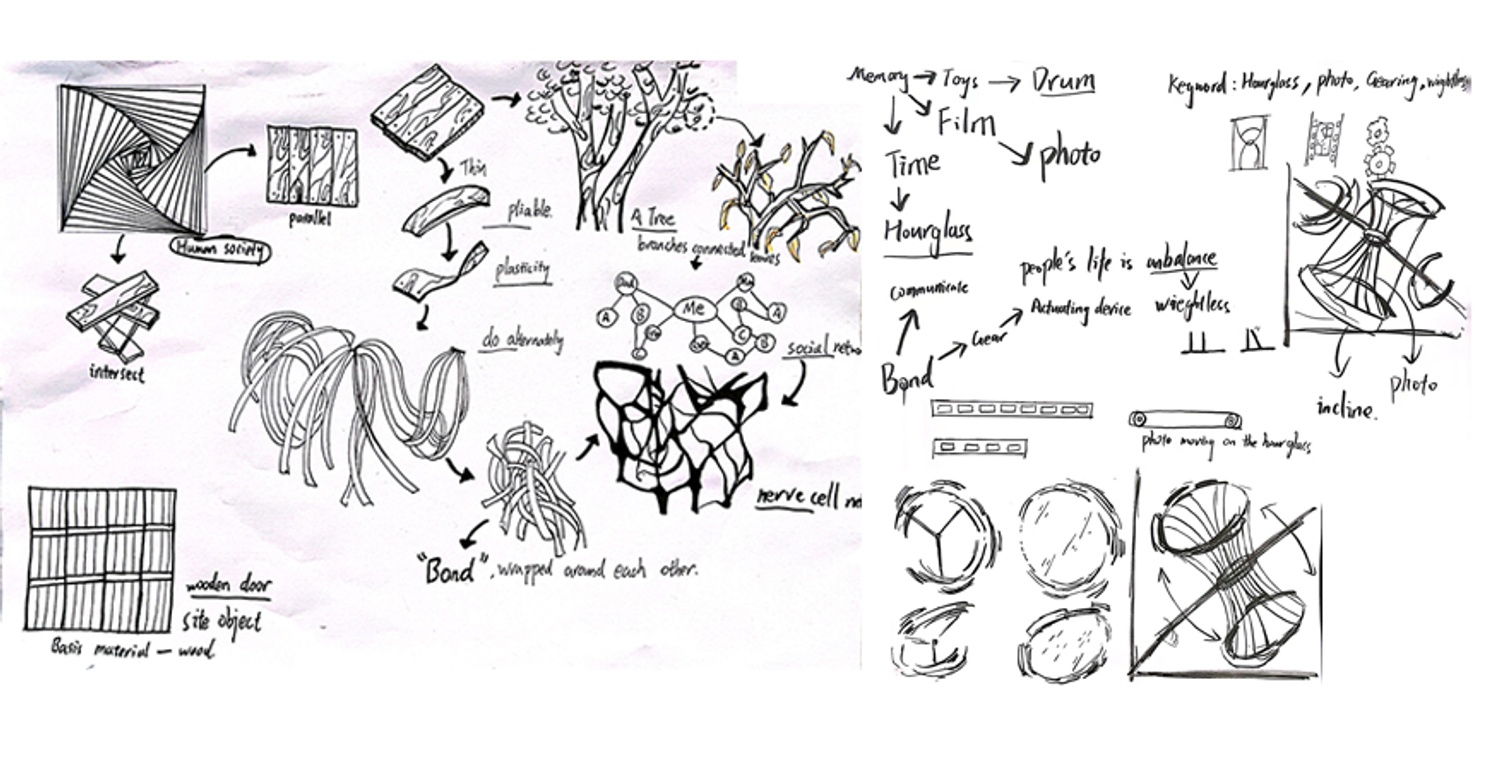
The concept of bond

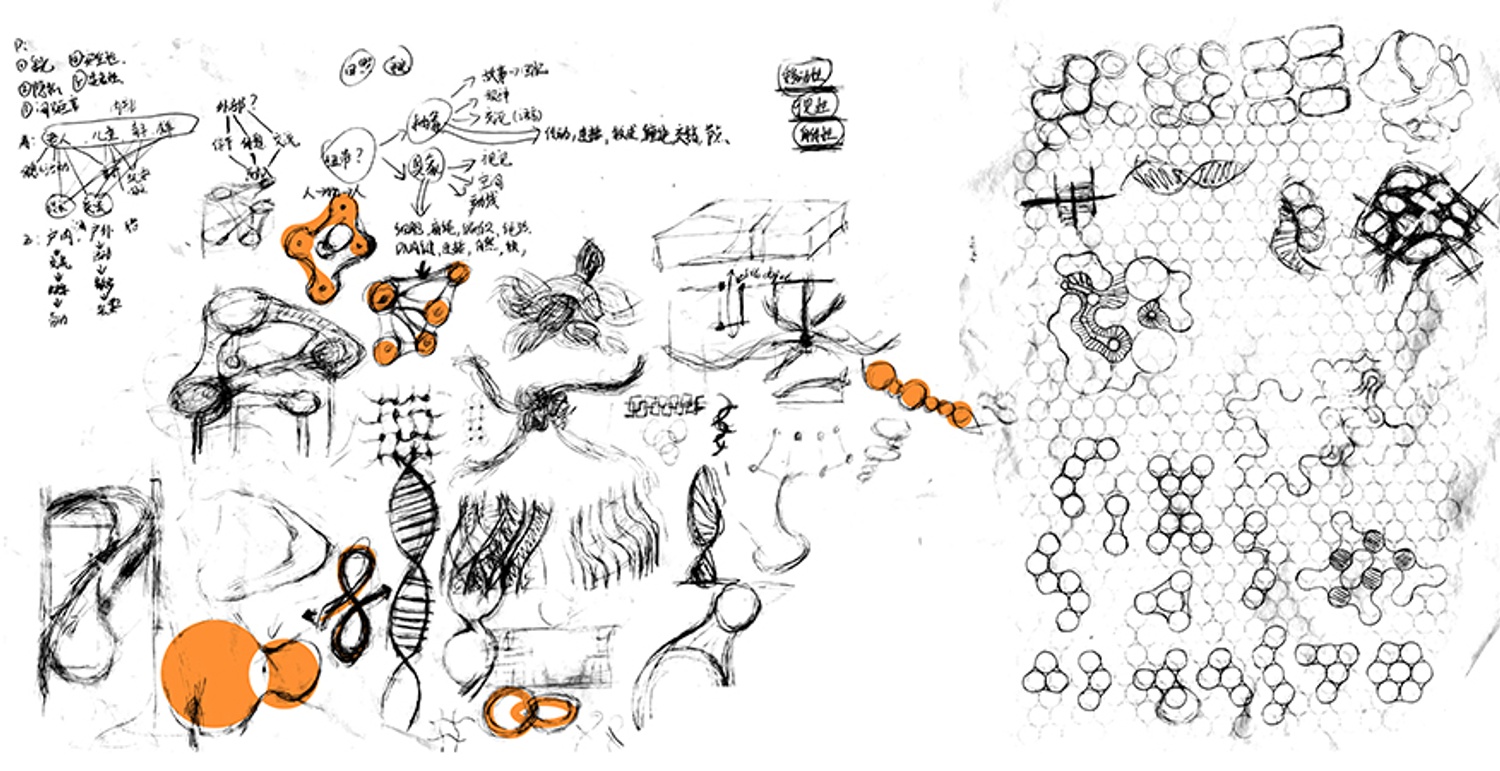
From the concept of bond, many elements are derived, including DNA strand structure, topology structure, knot structure, series structure. The elements are abstracted into the most basic geometric form and utilized. The elements are transformed from abstract to concrete.

Slider image

The extension of elements

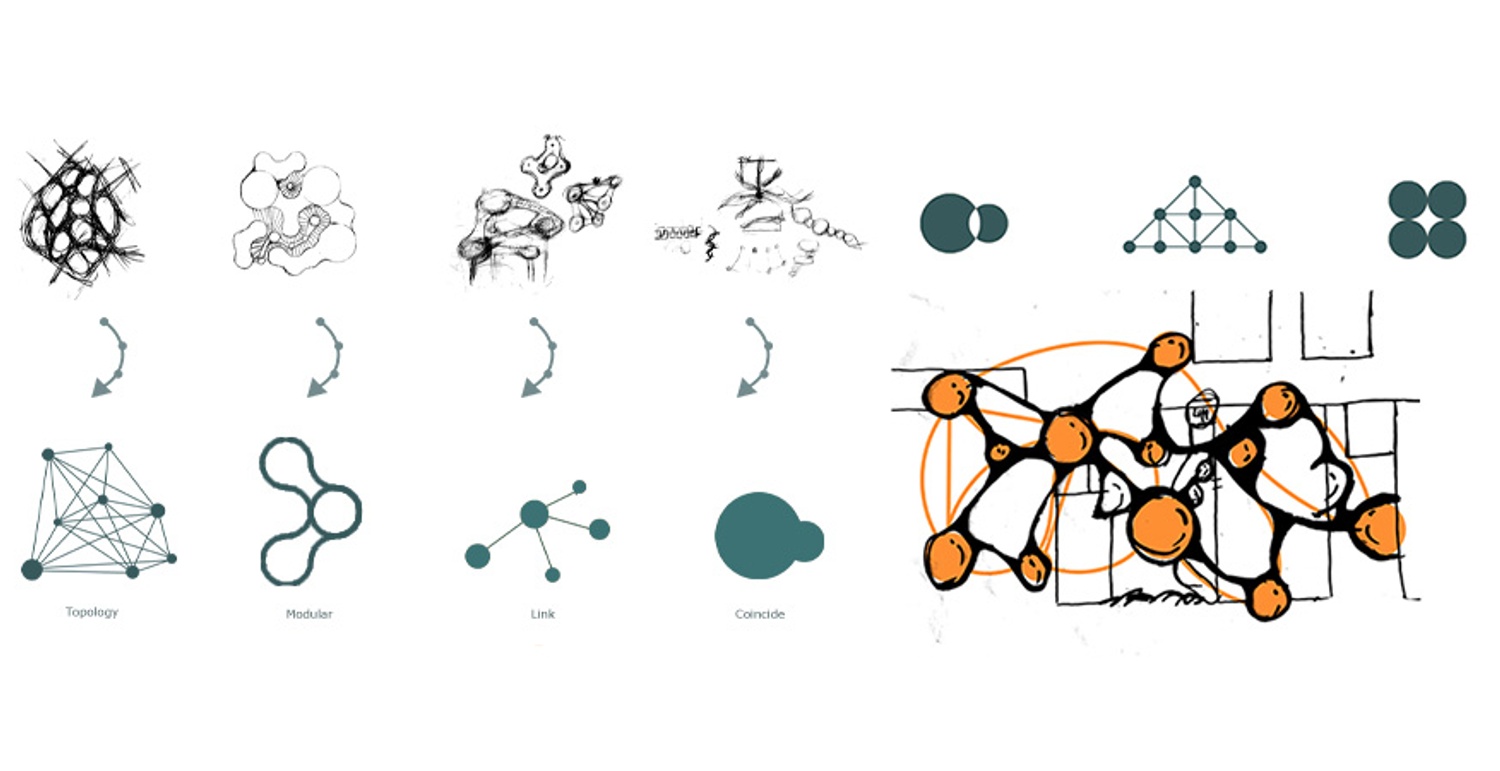
Through the extension of the elements on the element board, many interesting forms can be obtained, and different elements are "defined" according to the needs of different groups, and elements are reinterpreted from both abstract and concrete perspectives. The design method of modularization is obtained, the community planning method is obtained

Slider image

Design development 

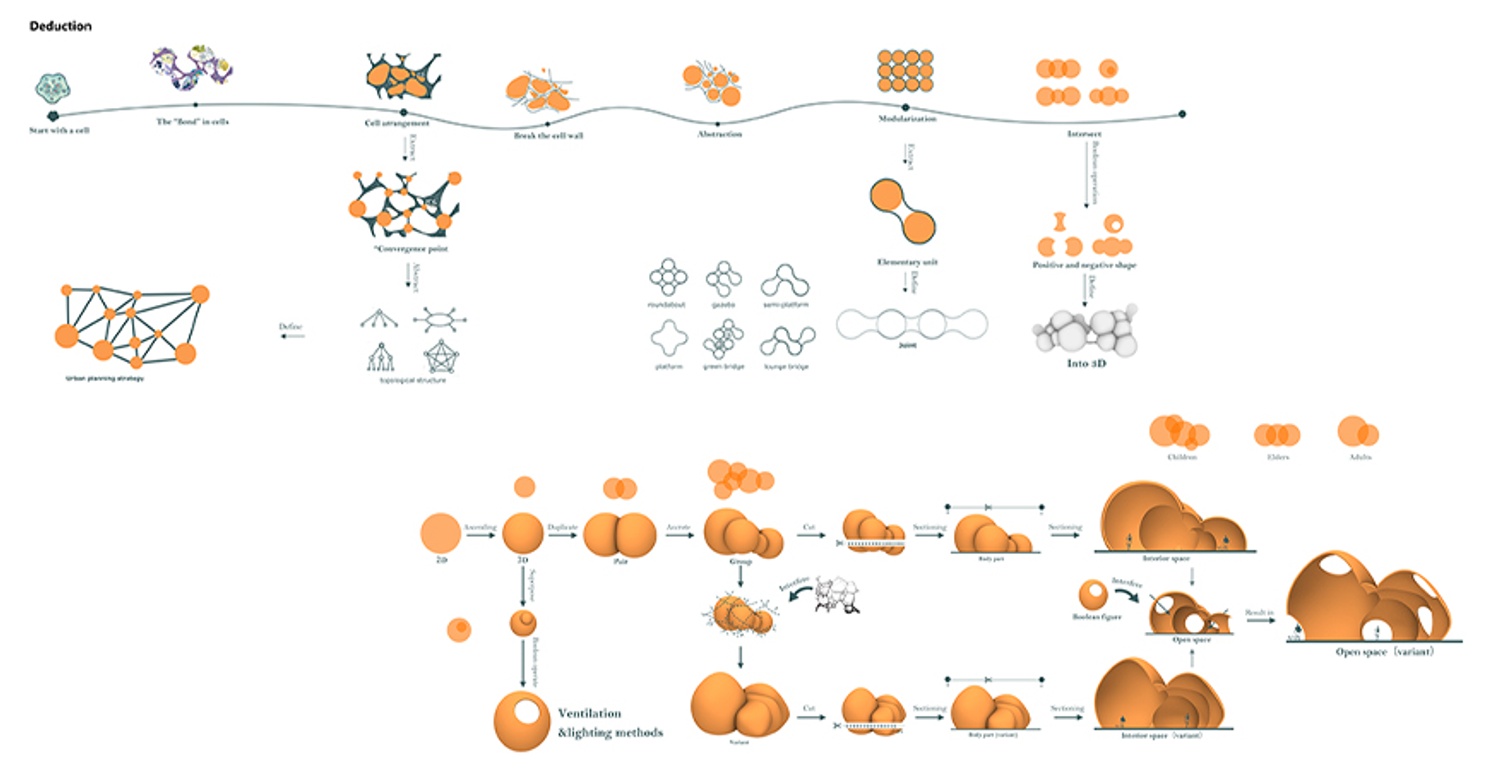
In this part, the three-dimensional space to be used in the design is developed based on the elements obtained from the transformation of two-dimensional graphics, and the body is analyzed based on the structure and operation methods (topological structure, Boolean operation method, modularity) obtained in two-dimensional.

Step 1 of 4

Final Design Scheme

Simple subtilite clear to the point 

Simple exploitation of the project 

Final Design Proposal

This community is clearly next to the next community, but it is cut off by a wall. Therefore, my design target is to take this community as the divergence point, radiate the surrounding communities in a planned way, break the "walls" in the community (physical walls and walls in people's minds) 

General Views

It is hoped that the design can change the gap between generations , and at the same time, it is hoped that the community can become a place full of children's laughter. And through the organic architectural form, rich space, break the cold appearance of modern architecture, and awaken people

Video Portfolio

Show the beauty with picturesque video portfolios. It will help people experience every scene.

Context, Site analysis, Design Narratives and Concept

Get to know the thorough design development from the stages listed below.

Community Project - Participant’s Installation

Design Narrative

Students theme  future life social problems historical and cultural forgetting. At the same time, to create some new values social and cultural impact, so that people stop to remember this history, based on the preservation of a period of renewal.Through the train station, the turret, these historical witnesses are integrated into the design pattern. Create an open and interesting space that guides people to experience cultural confidence and cultural invasion through text, sound, light, and in a multi-sensory way.
Through artistic and landscape architectural interpretation, the project offers a new journey of discovery while preserving the historical heritage. This design concept of integrated perception creates a place for people to interact with the past, present and future, enabling them to experience the richness of history and culture through a variety of senses.
Design brings people together, contributes to the long-term sustainability of the community, and drives people to interact. Design techniques: arrangement, irregular distribution, linear spread. Analysis results: Interactive installations enable people to understand the history of the region while interacting. Use long strips to arrange design techniques, metal materials, yellow elements what elements. The irregular arrangement is used in the layout, dotted lines are used in the space, and the material is metal. Open space for cultural activities to develop towards sustainable development through the community.

Honours Project - Site Research and Representation

Part I: Research and Analysis

The site is located in Kaiping Railway Station on the northwest side of Tanggu Road, Kaiping District, Tangshan City, Hebei Province. Surrounding collection of residential areas, commercial streets. Residents live adjacent to the freight train station, and the site has a road directly to the community with flat terrain and broad vision.
The road guard tower was built during the War against China. It has been abandoned and become an unattended place, and most of the people in the local community do not know that there is such a building, which is not much attention. At the rear of the turret is a small gate and access to the community behind the railway station, which was completed in 2015 and is accessible to people in the community. To the left of the turret is the business room of the railway station, and the trains running now are freight trials, about six or seven a day. The road opposite the turret was the old residential area of China Railway at that time, and the turret and the railway station were only separated by the railway, and there was no wall.
Social problem: the decline of historical memory. Limitations: Less attention, lack of public facilities. Available resources: Excellent location, concentration of people, historical value, unique appearance, freight station operation. Learning history to remember history, increase the construction of cultural self-confidence.

Part II: Site Representation

Narrative: The old rusty door lock 

Site object is The old rusty door lock, is the object in the site, that experienced the erosion of Rain Water all year round, the surface has been mottled with dust. Transmission of emotional value: Rust makes me think of its taste, from Rain Water, from the wind and sun. By Rain Water is associated with flow, the element of life. Old locks naturally oxidize, a gift from time. Oxidation tells us about the interaction between matter and its surroundings, and through the rusty web, we see an ancient memory that has been hidden and wrapped up. Metal often gives the impression of cold ice, cool and not smooth. What can not be rejected is its texture and quantity, the embodiment of strength and the symbol of tenacity.
The rusty mottled surface of the lock is a messy texture, like a piece of ice broken open, wrapped water out, ice cracks symbolize the traces of the past Rain Water. The rust marks on the heavy package of locks are like the rings of trees, and the grain of the rings is like ripples on the surface of the water. During the passage of the ship, it was like a time travel. Different from the tree ring, the growth ring of life is not only a linear trajectory, but also the accumulation of our experience and perception, the essence and wealth of our life. Converted into usable elements are: metallic, yellow, dotted with irregular distribution. The theme is parcel erosion.  

Honours Project

Theoretical Underpinning

Part I: Generation Z in the Digital Age

"The omnipresence of smartphones, continuous social media connectivity, and instant access to information have all significantly shaped Generation Z's development."

Unique challenges and opportunities faced by Generation Z

Generation Z, born between 1995 and 2009, has been profoundly shaped by the Internet and advanced digital technologies. Often described as having grown up "always on" with smartphones, and "born with a mouse in hand," this generation is deeply entrenched in a world where social media connectivity and instant access to information are the norms. These elements have significantly influenced their developmental landscape. The impact of these technological advancements on Generation Z can be attributed to three main factors, the first being at the societal level. Today's rapidly transforming society brings numerous uncertainties, particularly evident in the job market. This swift pace of change directly influences the career expectations and life planning of Generation Z college students. For instance, the rise of Internet-based service industries and burgeoning sectors like e-commerce and digital content creation present new opportunities. Conversely, traditional industries such as manufacturing and educational services are experiencing downturns, exacerbated by the effects of global pandemics and shifting policies.

Part II:  Legacy of China's Generation X

"This generation holds memories of the Cultural Revolution and impoverished childhoods, yet received idealistic education and witnessed the rapid development over forty years of economic reforms."

Unique historical experiences and values of China's Generation X

China's Generation X, born in the 1970s and 1980s, spans a pivotal period from the Cultural Revolution to the era of reform and opening up. This generation carries vivid memories of the Cultural Revolution and their challenging childhoods, yet they received a robust idealistic education and witnessed the remarkable progress of four decades of economic liberalization and modernization. Despite often having a relatively lower level of formal education compared to later generations, China's Generation X has shown remarkable resilience and adaptability. They have grown up with a blend of old-world values and new-world ambitions, which has instilled in them both a strong sense of confidence and an underlying feeling of insecurity about their social and economic environment. The values of this generation are deeply positive and pragmatic. Holding firm to the belief that knowledge is power and that diligent effort leads to independence and success, they have significantly contributed to the initial accumulation of wealth in both societal and personal contexts. As a result, they now occupy the highest positions in the workforce, commanding the greatest income levels of their time. 

Part III: Understanding China's Gen Z and Gen X

"Research indicates that educational background significantly influences how Generation Z and Generation X respond to stress, shaping their coping mechanisms and perspectives on challenges."

China's Generation Z and Generation X

From the 1990s to the early 21st century, China experienced a phase of rapid economic growth alongside a burgeoning scientific and technological revolution, notably marked by the rise of the Internet. These developments have not only instigated significant social changes but have also prompted a reevaluation of self-perception and future aspirations among the Chinese population. Research indicates that educational background plays a crucial role in how different generations, specifically Generation Z and Generation X, manage stress. Generation Z, influenced by a more utilitarian educational approach, tends to exhibit escapist behaviors when confronted with stress. In contrast, Generation X, educated under values of collectivism, typically adopts a more positive attitude towards real-life challenges, endeavoring to alter the status quo through persistent effort. The divergent educational experiences of these generations profoundly shape their personal values, life outlooks, and stress-coping methods, underscoring the need for thoughtful education reform and enhanced mental health education in China. "Generation Z" and "Generation X" represent distinct social cohorts within Chinese society, each with their own unique life goals, work ethics, and social interaction styles. These differences form the foundation of ongoing societal evolution in China, highlighting how shifting times and evolving social groups drive continuous change.

To Explore, Discover, & Regenerate