
George 高鹏

Ba (Hons) Interior & Environment Design - 2019 Cohort

My Design Philosophy

In my opinion, design is the whole process of conveying an idea through reasonable planning, detailed and thorough planning and various feeling forms. Through labour, people transform the world, create civilization, create material wealth and spiritual wealth, and the most basic and critical pioneering activity is creation. Design refers to the prior planning of creation activities, which can understand the planning technology and planning process of all creation activities as design.

Honours Project - Community Integration

Project Brief

Transforming an abandoned distillery into a leisure and entertainment experience centre

  • Issues to be addressed - immersive

  • Potentials/resources from the site - entertainment

  • Design scheme - leisure experience

  • Structural - winery

  • The final goal(s)/ achievement - Transform

Idea Generation & Design Process

Location

Object

Sketching process

Weaving 

Location

Object

Sketching process

Weaving 

Slider image

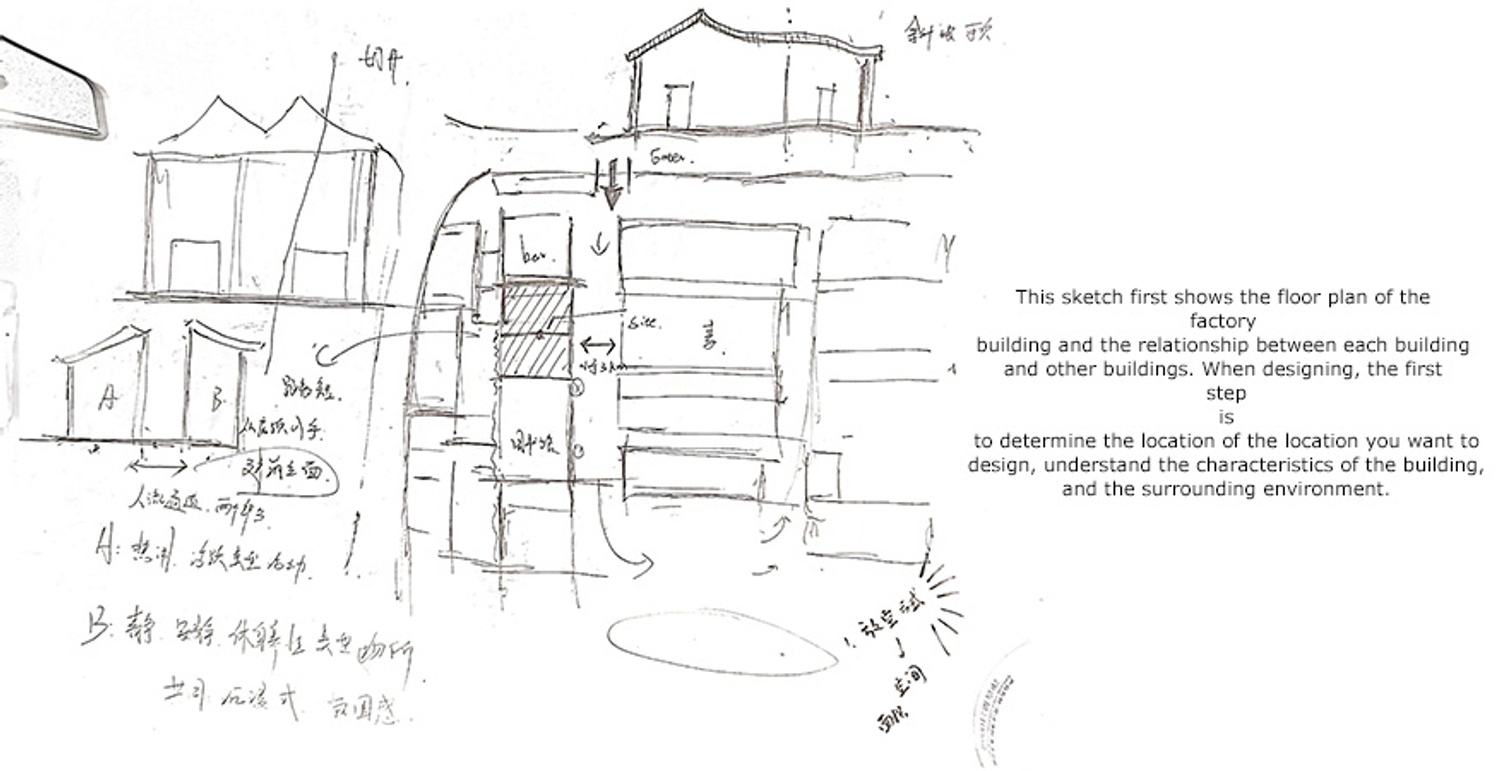
The location relationship

The main content of the first sketch is to sort out the location relationship of the factory building. You can see the approximate relationship between the selected area and other areas in the grass plot, clearly expressing the changes in the environment.

Slider image

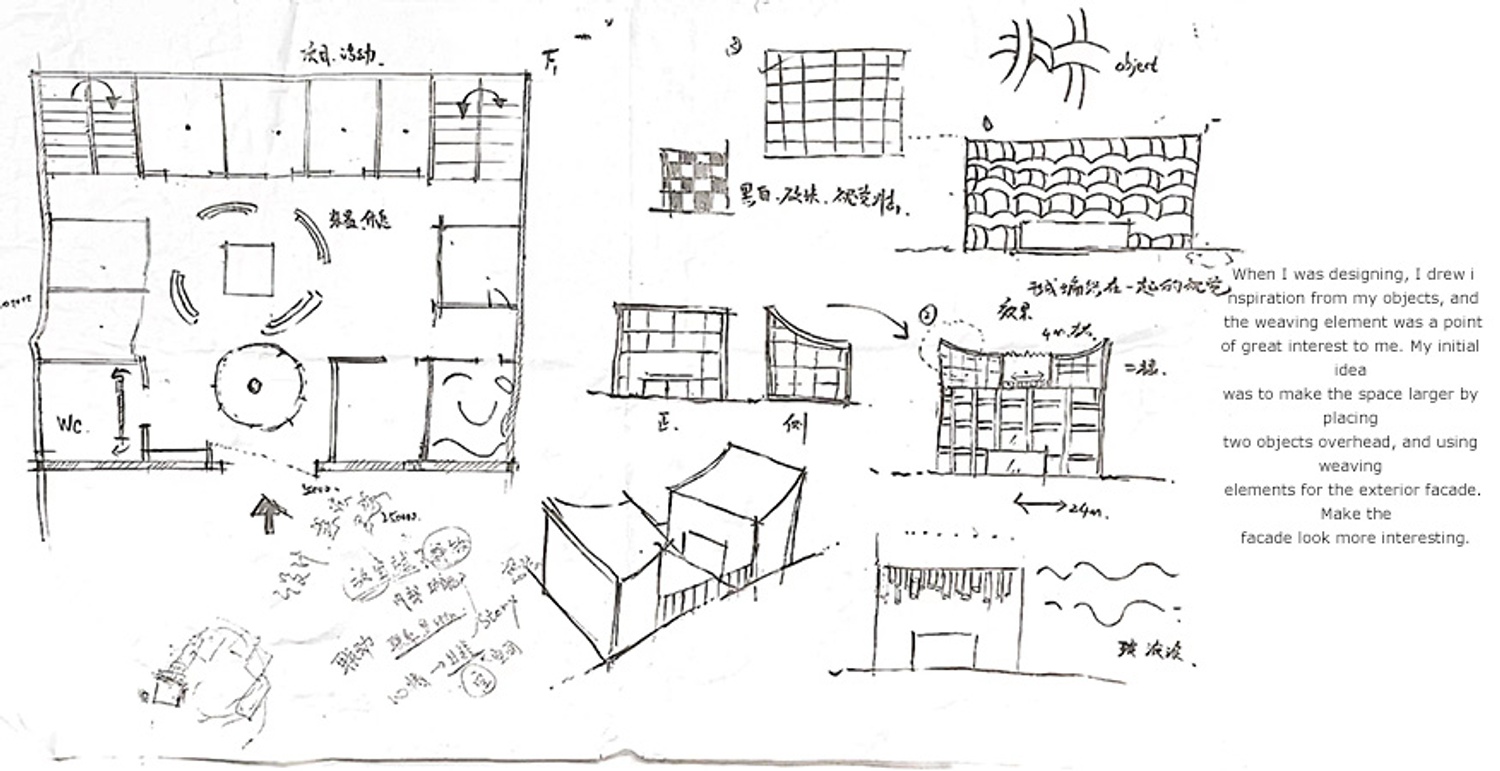
The Wine Sea

When I design, I consider the object I choose, the Wine Sea, in order to extract some elements from my object, such as the weaving elements outside the Wine Sea. Based on the weaving elements, many meanings are derived to design

Slider image

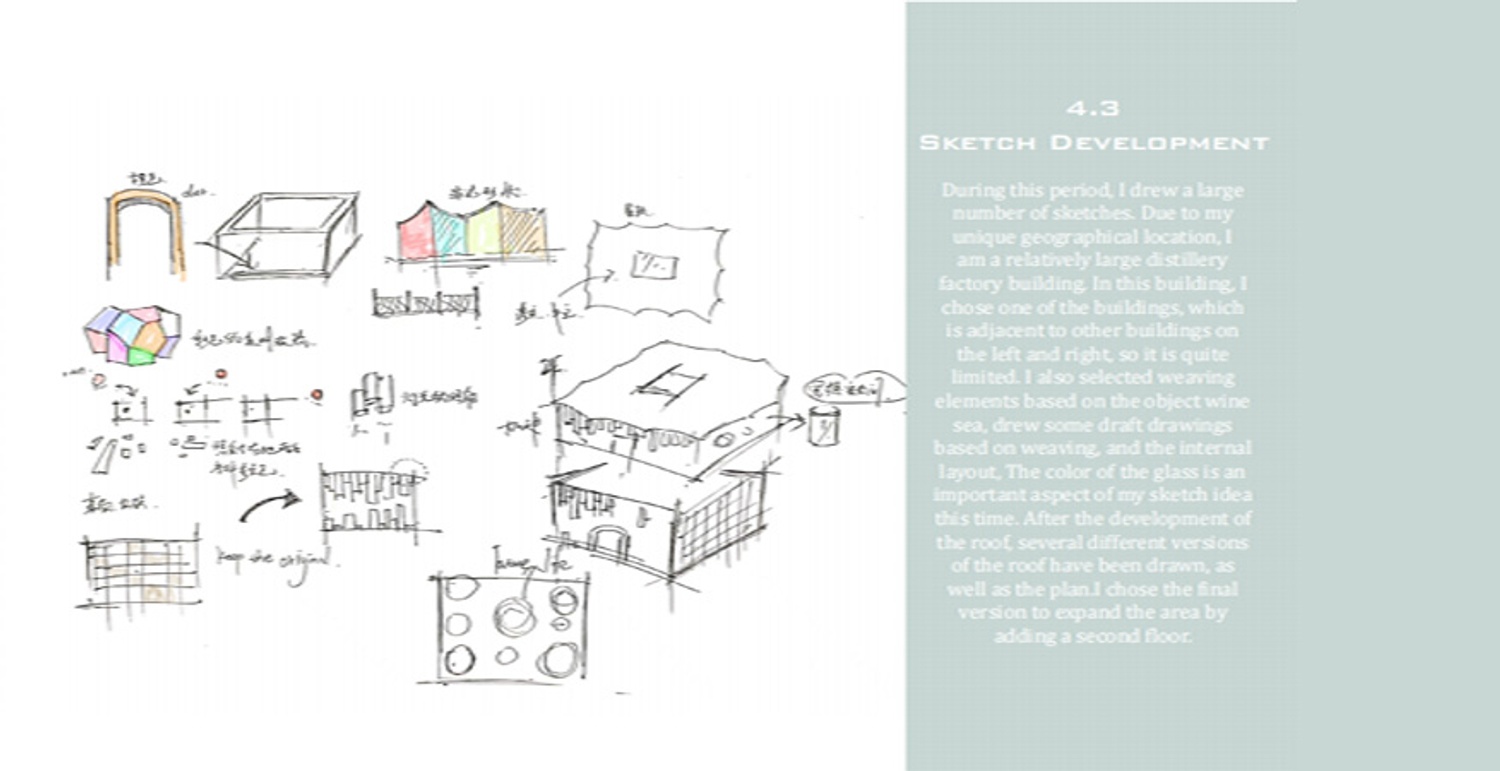
Sketch Process

This sketch is a very important point that I considered when designing, such as using stained glass, which is a very good element. I will apply this element to my design, and the roof will use a micro curved surface with a hole in the middle.

Slider image

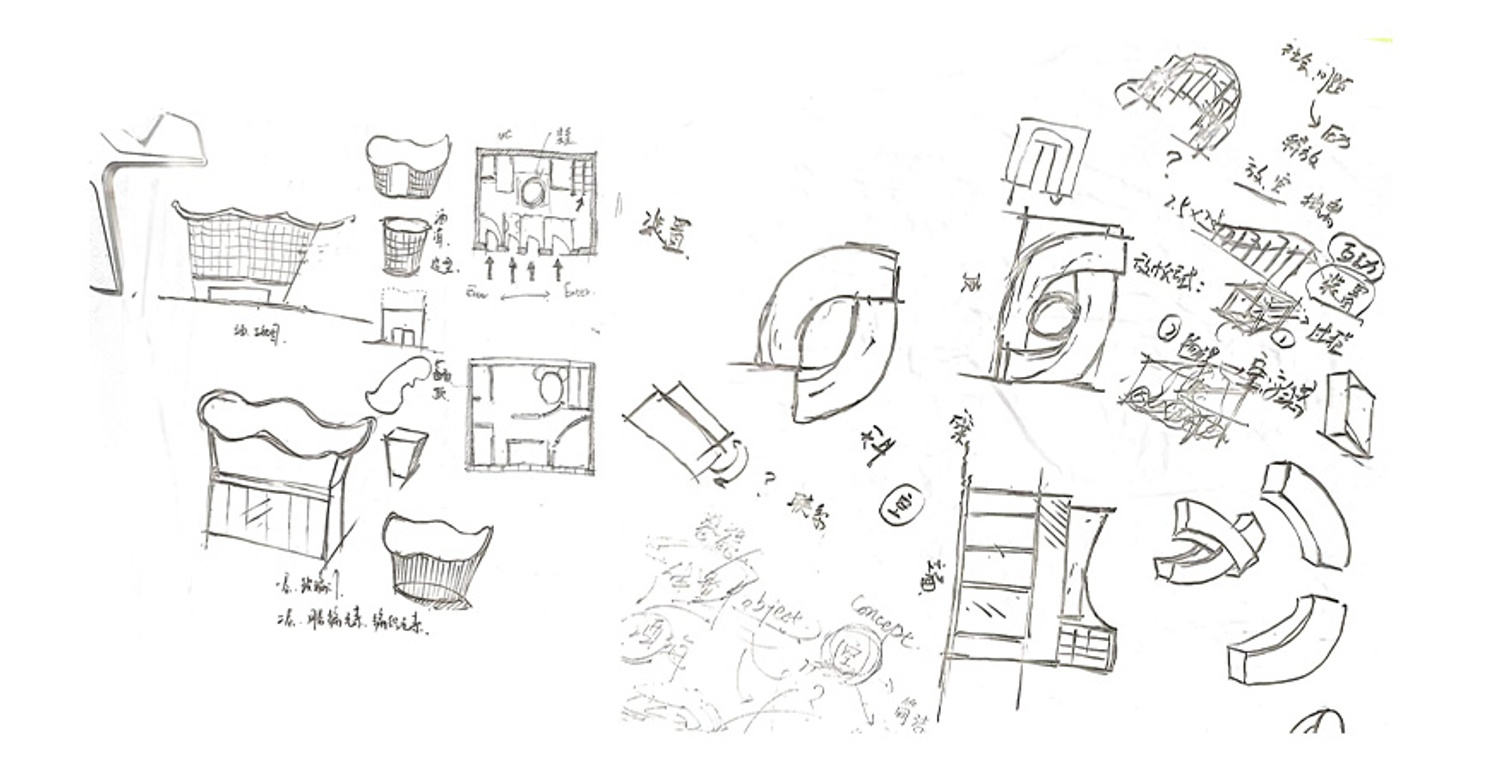
Weaving two buildings together and intertwining

This picture is a very important part of my design thinking. Firstly, what comes to mind is the weaving element. I apply this element to my design, weaving two buildings together and intertwining them to form a unique style of architecture.

Step 1 of 4

Final Design Scheme

Transforming an abandoned distillery into a leisure and entertainment experience centre

My final design plan is a leisure and entertainment experience centre, which is divided into two floors. The first floor is mainly for dynamic entertainment projects, such as rock climbing, personal amusement centre, shooting centre, electronic tube, etc. The second floor is mainly for static experiences, with immersive technology museums, meditation spaces, and other comfortable places. The entire exterior facade of the building is composed of different small buildings stacked together, creating a sense of wrapping. The overall height of the building is approximately 9 meters.

Final Design Proposal

Image 1 – This picture is one of my detailed images. It is located on the first floor, which is a parent-child amusement centre where parents can bring their children to enjoy parent-child time. Image 2 -This is an immersive experience hall located on the second floor, where you can enjoy a different experience, utilizing VR and XR technology to immerse people in a technological feast. Image 3 -This photo is a lounge that can be seen in the middle of the first floor, a sunken space where people can rest, sit and chat, communicate, and increase their emotions.

General Views

The following image is a rendering of some other perspectives in my main building, which clearly shows the material texture of the exterior façade, as well as the different features of each angle, such as the front, side, and top surfaces.

Context, Site analysis, Design Narratives and Concept

Get to know the thorough design development from the stages listed below.

Community Project - Participant’s Installation

Design Narrative

The core idea of 'dialogue' is physical contact. Precondition: It is necessary to make people feel physically and mentally connected. The beginning of touch is to arouse people's interest and curiosity, changing their posture and prompting subconscious adjustments. Communication with the work in one's own form is a means to achieve dialogue. The aim is to promote a relaxed and soothing physical and mental experience, considering the increasing pressure people have faced in recent years. Touching soft objects becomes particularly important in establishing a shared 'frequency'. This stems primarily from two core factors: arousing people's curiosity and interest in participation, which serve as the starting point for touch. Through the contact between the body and the soles of the feet, people are instantly transported to a space where they can relieve stress and enhance communication. Through immersive experiences, the aim is to encourage a reevaluation of the relationship between heritage and humanity in such buildings. This is achieved not only through written literature, but also through design that addresses psychological and practical challenges, with a focus on their initial protection. Simultaneously, the sustainable development of resources is considered to achieve 'eternity'. Through physical contact, the lights underfoot are triggered when one steps on the soft texture. Instantly, stress is relieved, and the surrounding mirrors highlight and reflect, creating a scene reminiscent of a fairyland.    

Honours Project - Site Research and Representation

Part I: Research and Analysis

The picture shows my building from the outside, where you can see that the road outside is very broken and there are many weeds. In front of it is a long road. In the above image, the first overall geographical location map can be seen, accurate to Baoding City. In the second image, the plane partition of this area can be seen, accurate to my factory. The location and nodes of the factory are marked on it, as well as the actual photos. I also divided all functions into 6 parts, each representing different functions. The green part in the lower right corner is the factory's area division. The red dot is a building I chose in this factory. This picture shows the traffic flow line, and you can clearly see two main roads. The east-west direction is Dongfeng East Road, the north-south direction is Hongqi Street, and the green part is the entire area. There is only one entrance to enter from Dongfeng East Road, and there are several intersections along the road. The first is the area of my house, the second is the hospital, and the fifth is the police station. Area 4 is an urban village where a large number of residents reside. The overall transportation here appears to be very developed and convenient, and the relationship between the main road and the secondary road is clearly expressed.

Part II: Site Representation

The object I have chosen is the Wine Sea, which is a large container for holding alcohol, hence it is called the "Sea". As a unique storage container in Baijiu brewing technology, Jiuhai has a history of nearly a thousand years. It was woven into a large basket by ancient people using thorns or wood, with blood and lime as adhesives on the inner wall, and pasted with over a hundred layers of hemp paper and white cotton cloth. Then, it was wiped and dried in a certain proportion with egg white, beeswax, cooked vegetable oil, etc. The weaving elements are one aspect that I am very interested in, as well as the shape of ripples. The "Jiuhai" is woven from vines grown in the Qinling Mountains. The inner surface of the prepared Da Jiu Hai is first wrapped in white cotton cloth and then coated with hemp paper using substances such as egg white, pig blood, and lime to synthesize adhesives. Each wine sea needs to be coated with 99 layers of hemp paper, and finally, the surface should be coated with vegetable oil, beeswax, etc. to make it smooth, dense, and without gaps. I also used red bricks in the material experiment, which are the walls of the building itself, representing the unity of the community. Each red brick needs to be stacked to form a wall.

Honours Project

Theoretical Underpinning

Part I: Generation Z and Self Identification

'.....he biggest social issues facing Generation Z is the impact of climate change and environmental degradation. Many members of this generation are deeply concerned about the future of the planet and are actively working to promote sustainability ......'

Society and Gen Z

Generation Z, born between the mid-1990s and mid-2010s, has grown up in a world that is vastly different from that of their parents and grandparents. Despite being the most diverse and tolerant generation in history, Generation Z has also faced a range of social issues that have shaped their worldview. One of the biggest social issues facing Generation Z is the impact of climate change and environmental degradation. Many members of this generation are deeply concerned about the future of the planet and are actively working to promote sustainability and reduce their carbon footprint. Another social issue affecting Generation Z is mental health. The pressure to succeed academically, socially, and professionally has taken a toll on many young people, leading to high rates of depression, anxiety, and other mental health issues. Furthermore, members of Generation Z are navigating complex issues related to identity, including gender, sexuality, and race. The rise of social media has also created new challenges related to privacy, cyberbullying, and digital addiction. Finally, the COVID-19 pandemic has had a significant impact on the lives of Generation Z, disrupting their education, social lives, and job prospects. The long-term effects of the pandemic on this generation remain to be seen.   

Part II:  Pre-generation Z and Self Identification

' the biggest social issues facing Generation X is the impact of economic globalization, which has led to the outsourcing of jobs and increased competition for employment opportunities.'

Globalization and Gen X

Generation X is a demographic cohort that includes individuals born between the early 1960s and late 1970s. Members of this generation have faced a variety of social issues, both during their formative years and in their adult lives. One of the biggest social issues facing Generation X is the impact of economic globalization, which has led to the outsourcing of jobs and increased competition for employment opportunities. This has contributed to a decline in economic security and social mobility for many members of this generation. Another social issue affecting Generation X is the rise of technological advances, which has had a significant impact on their personal and professional lives. While technology has created new opportunities and efficiencies, it has also contributed to social isolation and a decline in face-to-face communication. Furthermore, members of Generation X have also had to navigate issues related to changing family structures, including a rise in divorce rates and non-traditional family arrangements. Additionally, they have faced ongoing challenges related to discrimination and inequality based on gender, race, sexual orientation, and other factors.

Part III: Generations and Community

'...consequence of this shift is that younger generations may struggle with face-to-face communication and may rely heavily on digital platforms for social interaction. This can create challenges in cross-generational communication.....'

Technological differences between Generation X and Generation Z

Input your words here Technological differences between Generation X and Generation Z have contributed to a breakdown in social communication between these two groups. While Generation X grew up with traditional forms of communication such as landline telephones and face-to-face interactions, Generation Z has grown up in a world dominated by social media, texting, and other forms of digital communication. One consequence of this shift is that younger generations may struggle with face-to-face communication and may rely heavily on digital platforms for social interaction. This can create challenges in cross-generational communication, as members of Generation X may prefer in-person conversations and may be less comfortable with social media and other digital tools. Another issue is that social media can create echo chambers, where people are only exposed to ideas and perspectives that align with their own. This can lead to a breakdown in understanding and empathy between different generations, as each group may have vastly different experiences and beliefs. To bridge these technological differences, it is important for members of different generations to make an effort to understand and learn from each other's perspectives. This may involve using a mix of traditional and digital communication methods, as well as engaging in activities that encourage face-to-face interactions and community building.

To Explore, Discover, & Regenerate