
Icey 任知雨

Ba (Hons) Interior & Environment Design - 2020 Cohort

My Design Philosophy

My name is Zhiyu Ren,my English name is Icey, my major is Interior design.

In my opinion, design conveys specific emotional information to users, and design should be warm and serve users, which not only satisfies users' psychological demands, but also conveys unique artistic aesthetic information.

Honours Project - Community Integration

Project Brief

Integration of aging community - Organic Modular Construction

  • Issues to be addressed : key sentence explaining issues addressed 

  • Potentials : Possible potentials in a key sentence 

  • Design scheme : Key design scheme 

  • Structural : Key concept 

  • The final goals : Project goals not just for this project but for further designs

Idea Generation & Design Process

Generation

Bond

Elements

Development

Generation

Bond

Elements

Development

Slider image

Generational understanding

This is based on the situation of the increasing work pressure of young people, through the classification of different generations and understanding the behavioral habits of different generations, the elderly can be accompanied and the young can be relaxed. It is also a "bond" that connects the community together.

Slider image

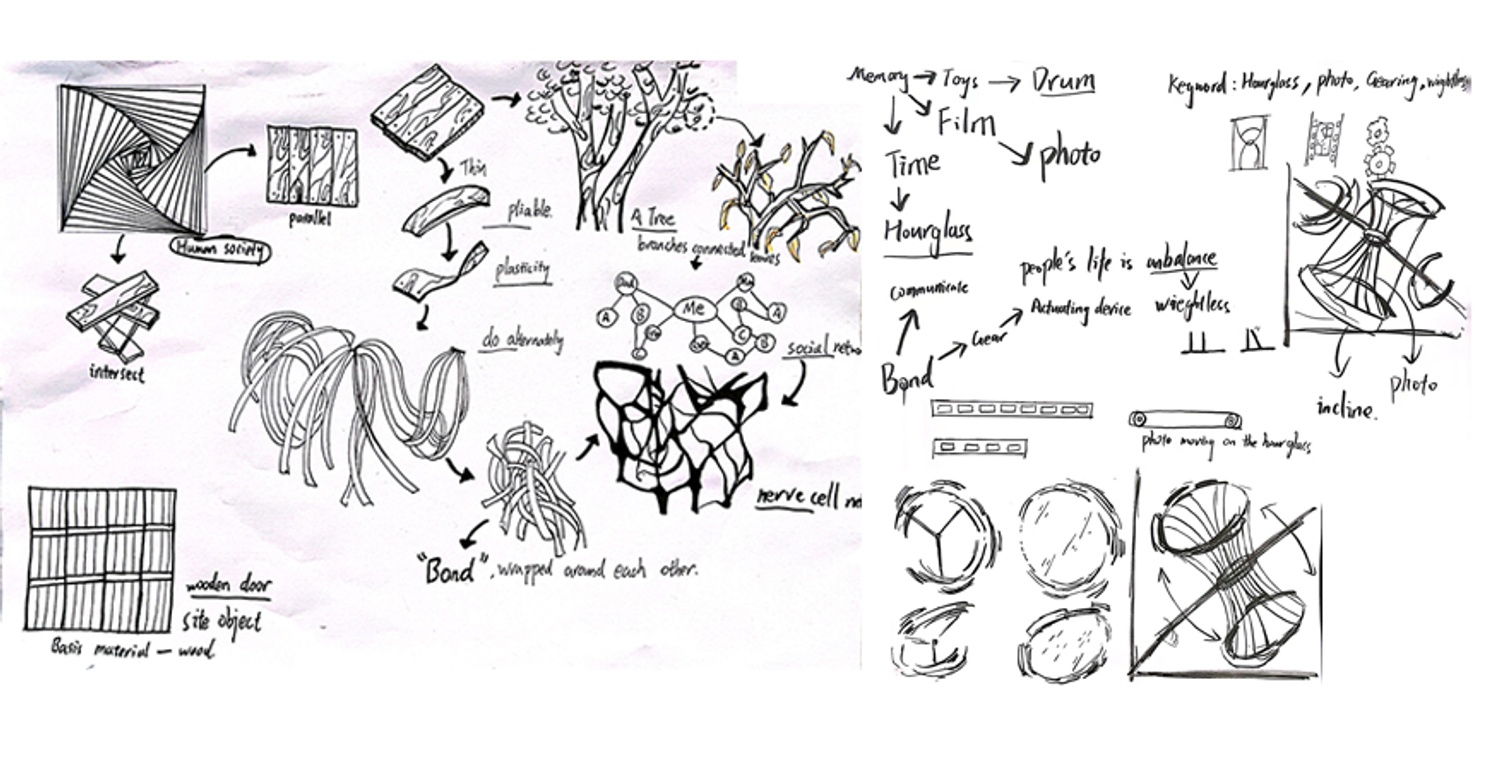
The concept of bond

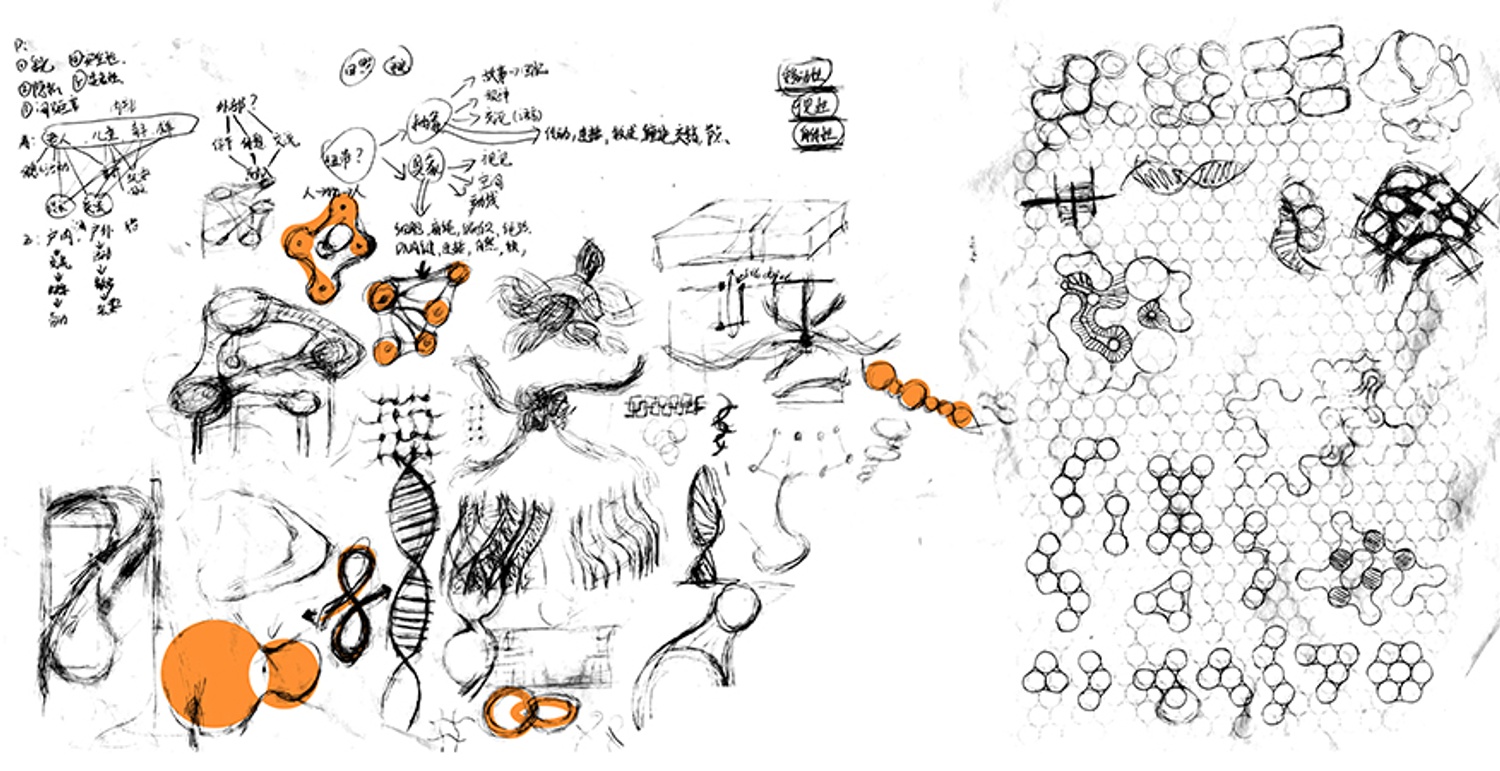
From the concept of bond, many elements are derived, including DNA strand structure, topology structure, knot structure, series structure. The elements are abstracted into the most basic geometric form and utilized. The elements are transformed from abstract to concrete.

Slider image

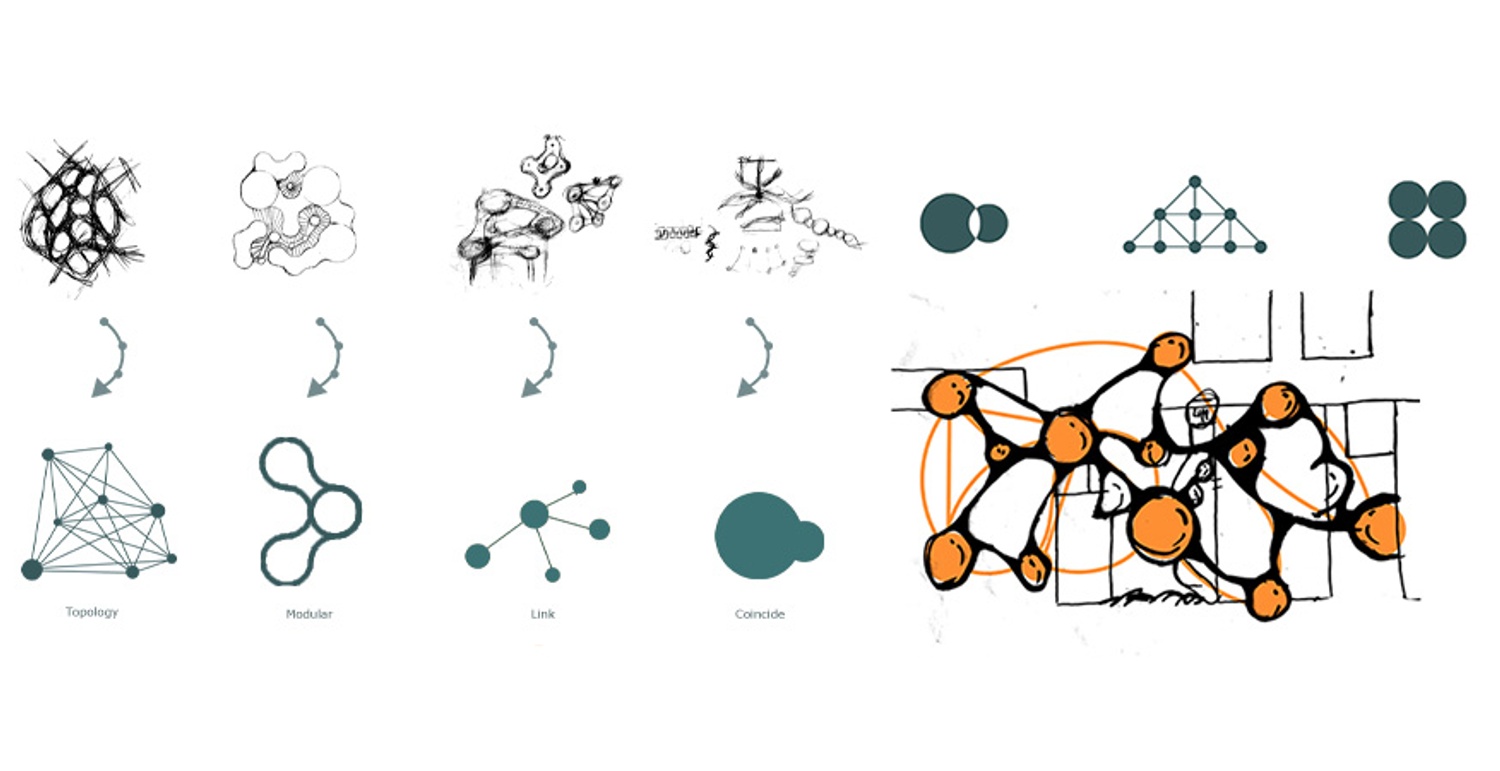
The extension of elements

Through the extension of the elements on the element board, many interesting forms can be obtained, and different elements are "defined" according to the needs of different groups, and elements are reinterpreted from both abstract and concrete perspectives. The design method of modularization is obtained, the community planning method is obtained

Slider image

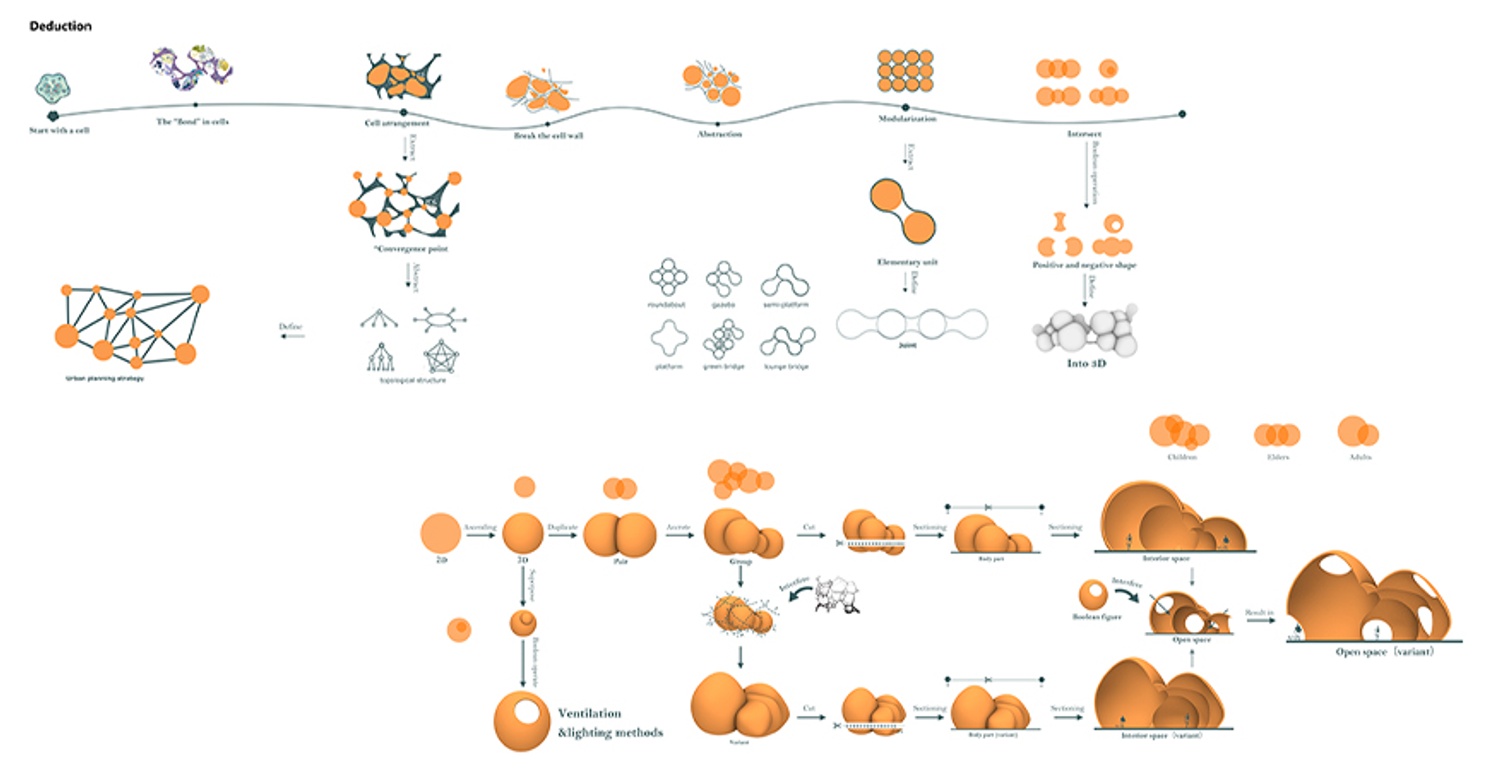
Design development 

In this part, the three-dimensional space to be used in the design is developed based on the elements obtained from the transformation of two-dimensional graphics, and the body is analyzed based on the structure and operation methods (topological structure, Boolean operation method, modularity) obtained in two-dimensional.

Step 1 of 4

Final Design Scheme

Simple subtilite clear to the point 

Simple exploitation of the project 

Final Design Proposal

This community is clearly next to the next community, but it is cut off by a wall. Therefore, my design target is to take this community as the divergence point, radiate the surrounding communities in a planned way, break the "walls" in the community (physical walls and walls in people's minds) 

General Views

It is hoped that the design can change the gap between generations , and at the same time, it is hoped that the community can become a place full of children's laughter. And through the organic architectural form, rich space, break the cold appearance of modern architecture, and awaken people

Video Portfolio

Show the beauty with picturesque video portfolios. It will help people experience every scene.

Context, Site analysis, Design Narratives and Concept

Get to know the thorough design development from the stages listed below.

Community Project - Participant’s Installation

Design Narrative

Students theme  The theme is "Weaving." Today, people living in a stressful city feel anxious, overwhelmed, and can't even find an outlet to relax and rest, leaving them wondering why they exist. Therefore, through this device, you can see your real inner world, truly connected with the community and society, no longer a single individual, relieve anxiety, understand the real self, and truly let yourself feel relaxed, so as to better work and life.
The overall design features a smooth shape and healing colors in structure, which can effectively alleviate people's anxiety. Place the characteristic plant vines and lamp balls in a transparent ball. The user places their hand on a temperature sensor, which is connected to the lamp ball. The sensor will reflect the color tone of the light according to the temperature of the person, displaying different reflections. So that people can calm down and find their true selves. Integrated design: When the user touches the device, the device can feel the user's mood, reflect the inner color, and show the combination of light and shadow and the design device through sunlight or moonlight, to give psychological comfort to anxious people.

Honours Project - Site Research and Representation

Part I: Research and Analysis

-the north is resident area and hospital residential And the government -the south area is hospital and resident area -the east area is a big nosiy road Limitations: -The area is not large. -Adjacent to the road, there is a lot of noise. Besides is a tall hall. The surrounding facilities are old. The per capita cultural level is relatively high. Less greening, no sustainable facilities. The physically and mentally tired middle-aged person is more. Potentials: Located in a commercial district with a superior geographical location. the room next to this building can be used. Multiple residential areas. Wide range of community services No religious restrictions. The per capita cultural level is relatively high. More residents around. So the social concern is In a specific environment of anxiety, the transition of middle-aged people to multiple roles in society leads to their imbalance.

Part II: Site Representation

Narrative: 

(Up to 250 words) Vines are full of vitality, a sense of hope, and let people feel the breath of nature Through the concept of healing landscape, it is designed to relieve pressure by affecting people's senses and intervening in people's psychology to achieve the purpose of psychological relaxation, which is conducive to people's physical and mental development It is conducive to people's individual stress relief. Add more flexible space, and make layout planning for the landscape so that people can relax themselves in social interaction. Cultivate biophilia experience, intervene in natural elements, and provide people with places close to nature. Repair psychological trauma in cities to improve urban living environment. Conducive to people and landscape symbiosis The harmonious relationship between man and man, man and creatures, man and community, man and city, man and architecture, man and nature, architecture and nature, single and whole is interwoven in this design to build a healing space, and people can feel the beauty of life in the process of feeling. 

Honours Project

Theoretical Underpinning

Part I: information Cocoon-Generation Z

"Continuous exposure to shallow information can fatigue the brain, trapping the logical system and cognitive abilities within a cocoon of superficial content."

the complexities of Generation Z

Generation Z, true digital natives, have been immersed in various forms of digital media from a very young age. This constant exposure often leads to a sense of inner loneliness, as they turn to the internet in search of emotional warmth. The online realm, however, is dominated by fragmented information which provides only superficial comfort. Fragmentation simplifies complex events without encouraging deep thinking, leading to cognitive overload. As a result, Generation Z may experience fatigue from excessive surface-level information, which traps their logical systems and thinking abilities within an information cocoon. This cycle can cause anxiety, concentration difficulties, and a loss of interest in activities, impacting their overall mental well-being. As the pivotal group of contemporary times, it is crucial for Generation Z to critically assess the advantages and disadvantages of their digital engagements. They must be vigilant about the adverse effects of dispersed information and avoid numbing themselves with transient pleasures. By establishing a correct understanding of media consumption, Generation Z can evolve into more rational and mature media users, enhancing their capacity to handle the complexities of the digital age effectively.

Part II:  Balance and stressful-Generation Y

"Generation Y often feels like a Rubik's Cube, pulled in various directions, considering the needs of others while feeling internally oppressed."

Exploring the unique pressures faced by Generation Y

Generation Y faces a unique set of pressures and anxieties stemming from various societal shifts including family planning policies, rapid economic growth, and transformative societal changes. Now in middle age, these individuals often find the limited labor force within their families a source of considerable stress, heightening their anxiety as they balance personal aspirations with familial responsibilities. Situated between the traditionally minded Generation X and the progressively inclined Generation Z, Generation Y navigates a complex landscape of expectations. While Generation X values traditional notions of success and stability, Generation Z is driven by innovation and peer competition, continually pushing the boundaries of personal independence. For Generation Y, making decisions often involves juggling the conservative values of their predecessors with the progressive ideas of the younger generation. This dynamic can lead them to suppress their own views in favor of family harmony or societal acceptance, akin to a complex Rubik’s Cube being manipulated by external forces. The need to consider and often prioritize the expectations of others can lead to a sense of oppression and unfulfilled personal potential.

Part III: Different cognitions of emotions in the same era-Generation X and Generation Z

"Generation X focuses on cognitive empathy, involving reasoning about emotional states, whereas Generation Z experiences affective empathy, directly feeling the emotions of others."

Contrasting empathy in Gen X vs Gen Z.

Empathy, the capacity to experience and understand the emotions of others while distinguishing oneself from them, serves both as a personality trait and a complex psychological process. This process involves both a bottom-up mechanism of emotional sharing and a top-down cognitive regulation. The fundamental difference between Generation X and Generation Z lies in their distinct approaches to perceiving and processing emotions. Despite existing in similar environments and maintaining ostensibly close relationships, there is an intangible gap that often results in a profound division between these two cohorts. Generation X tends to be more pragmatic, focusing primarily on cognitive empathy. They engage in reasoning and judgment about emotional states, which often leads to a more analytical approach to understanding feelings. In contrast, Generation Z is more inclined towards affective empathy, prioritizing the feeling and experiencing of others' emotional states and responding empathetically. Consequently, when confronted with identical situations, these two generations exhibit differing emotional perceptions and perspectives, leading to varied responses and interpretations.

To Explore, Discover, & Regenerate