
Jenny 陈佳妮

Ba (Hons) Interior & Environment Design - 2019 Cohort

My Design Philosophy

Therefore, I am very curious about the traditional architectural structure. My design philosophy has always been to combine the old with the new. It not only inherits the characteristics of traditional architecture but also re-plans the whole, rejuvenating the traditional culture.

Honours Project - Community Integration

Project Brief

Title of their project

  • Issues to be addressed - The application of tile arrangement

  • Potentials/resources from the site - The reconstruction of walls

  • Design scheme - Participation in immersive technology

  • Structural - Creating a new spatial layout

  • The final goal(s)/ achievement - Innovation of interactive mode

Idea Generation & Design Process

Experimentation

Inspiration

Layout

Rotation

Experimentation

Inspiration

Layout

Rotation

Slider image

Experimentation 

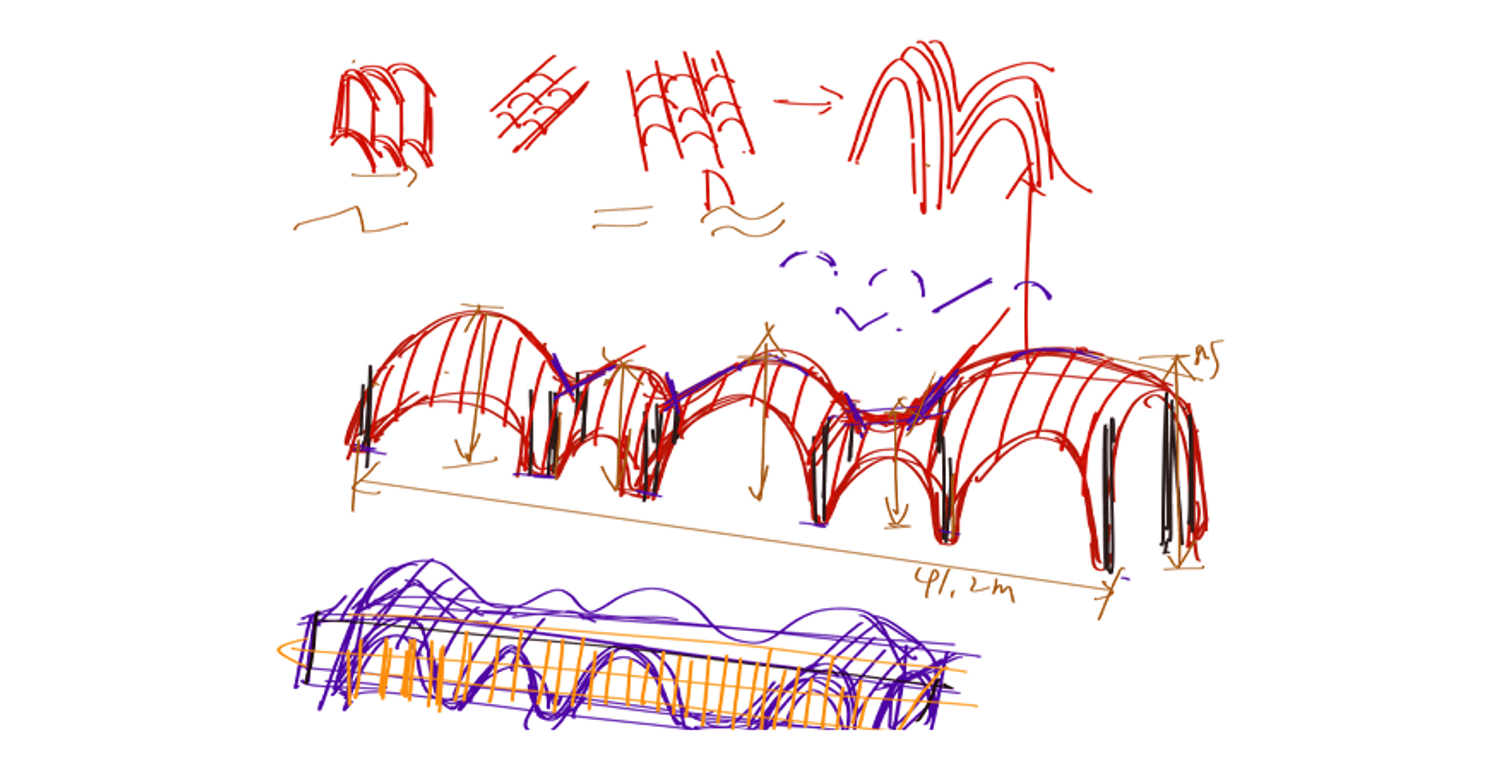
The inspiration comes from the continuous arrangement of tiles, and the initial inspiration is similar to creating an external curved structure.

Slider image

Inspiration comes from broken tiles

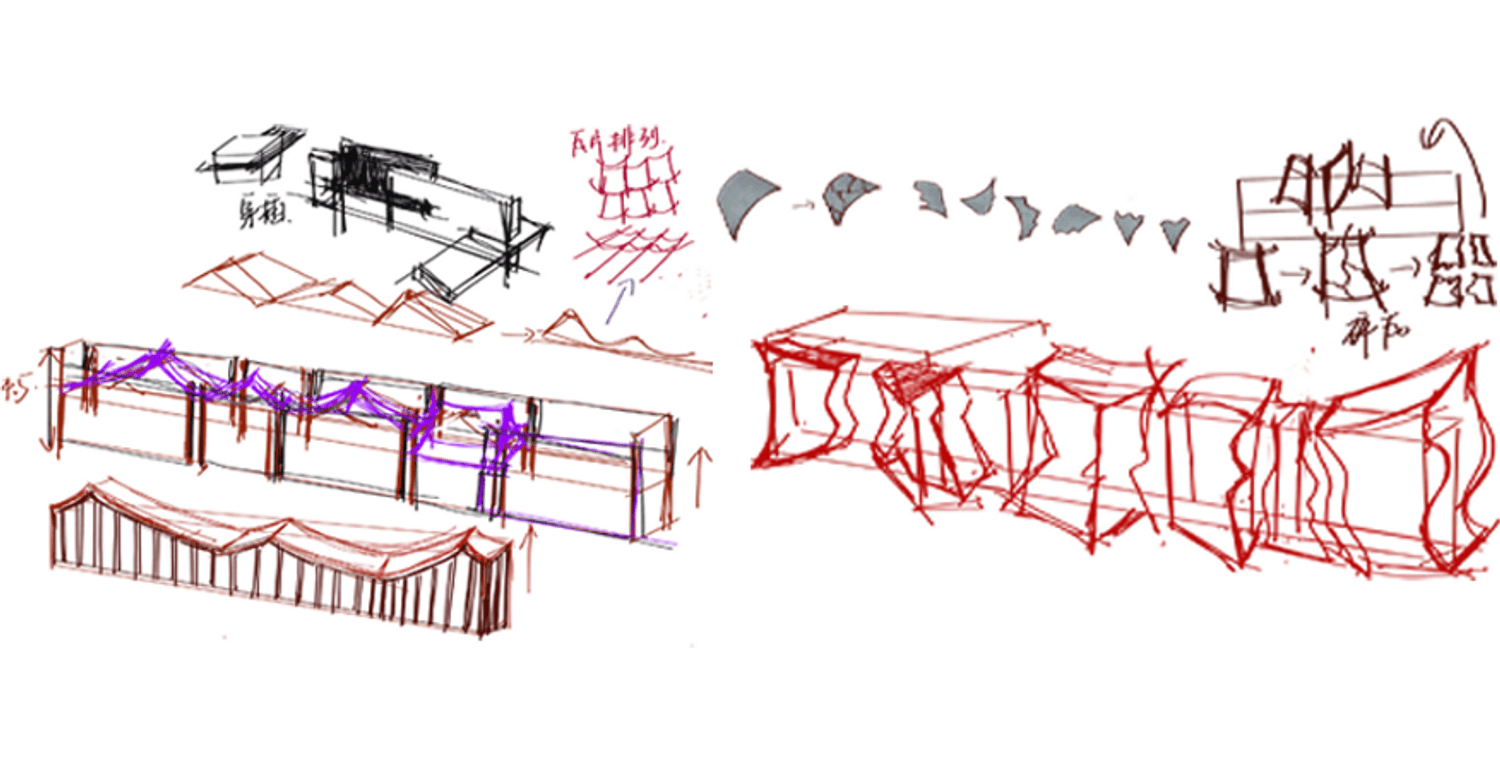
The inspiration comes from broken tiles, transforming the appearance of the building into a broken form. Alternatively, use continuous arrangement of tiles to reconstruct the shape.

Slider image

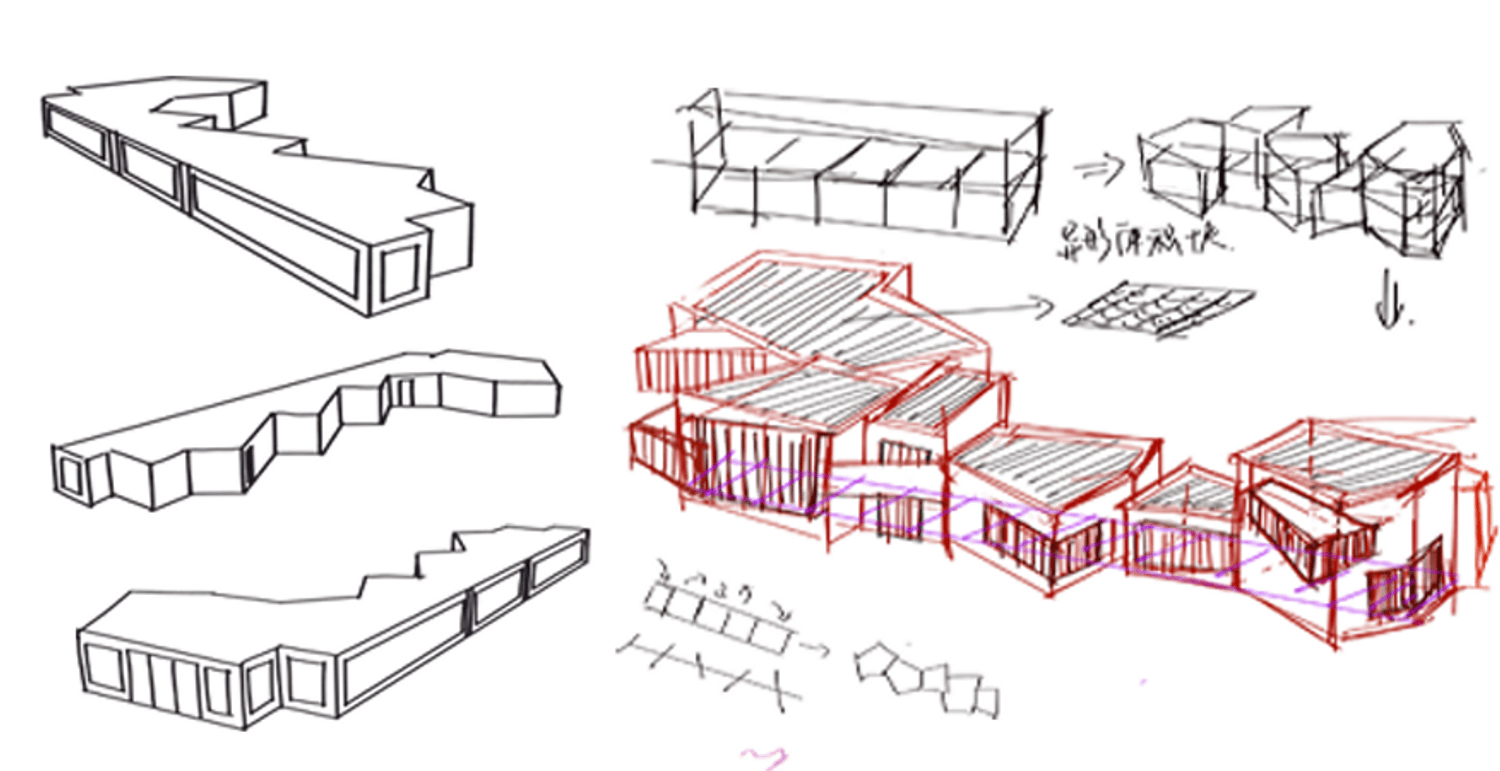
Some ideas for plane layout.

Some ideas for plane layout.

Slider image

Based on the rotation

Based on the rotation of the wall and the preservation of some parts of the wall, as well as the design concept of reconstruction. The wall rotates and reassembles according to the angle of tile arrangement.

Step 1 of 4

Final Design Scheme

Reconsitution

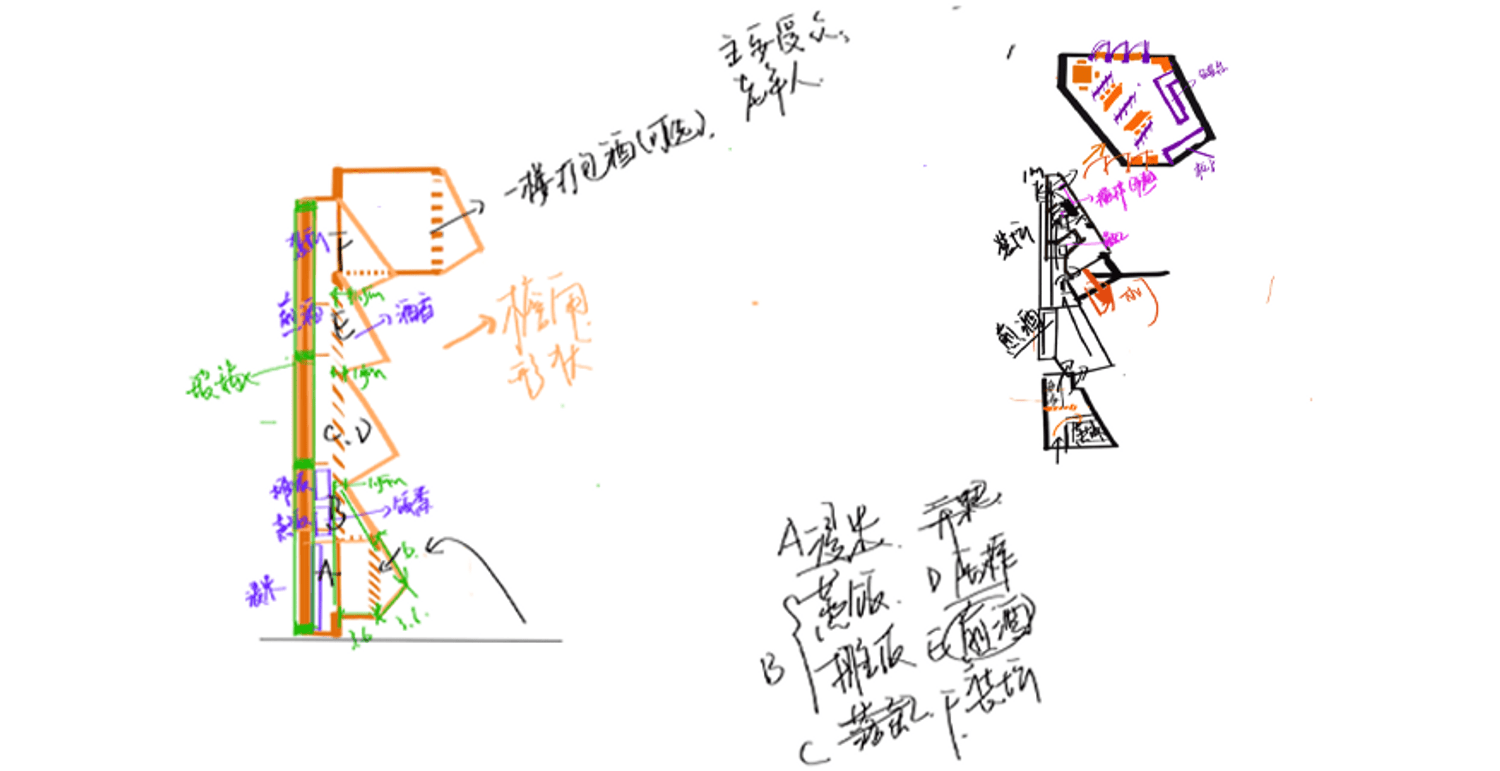
The overall design of residential areas will break the shackles of the original spatial scope and expand the internal size of the space through the rotation of the walls. The rotation of the wall is based on the arrangement of tiles. Supported by the design concept of "reconstruction", half of the original walls in the entire residential area are retained, while the other half are rotated, causing some of the original wall positions to change, while the internal size of the space expands eastward; Finally, adjust the angle of wall rotation to make it more reasonable.

Final Design Proposal

The residential area is connected to the local culture by showcasing the process of making yellow wine and immersive new technological means. The interior of the design uses decorative columns to change the direction of personnel, and the arrangement of decorative columns is also designed based on the regular arrangement of tiles.

General Views

The overall design breaks away from the original straight tube shape, breaks down the original spatial barriers, and expands the space. Create interactive display spaces through different tile arrangements or interact and communicate with different tiles and spaces.

Context, Site analysis, Design Narratives and Concept

Get to know the thorough design development from the stages listed below.

Community Project - Participant’s Installation

Design Narrative

Goal: to spread culture through simple interaction. The phenomenon of cultural convergence is increasingly significant, and the stereotypical modern cultural display space can no longer meet the aesthetic needs of the public. Simultaneously, the emergence of emerging media technology closely links new media art design with display space design. Material: Ceramic tile is a traditional regional architectural feature. Over time, the use of ceramic tiles has gradually shifted from functional to decorative. It can be applied to space design based on different tile arrangements and connection modes. Create interactive display spaces through varying tile arrangements, allowing people to interact and communicate with the space by touching different tiles. Design details: The entire device resembles a small curved channel, symbolizing the process of people's contact and understanding of culture. The interaction between people and culture occurs through an enlarged version of "tiles". People obtain information by flipping the front and back sides of the tiled tile. Through this flipping process, people engage with the device. Compared to conventional cultural displays, this approach aims to leave a more memorable impression on people.

Honours Project - Site Research and Representation

Part I: Research and Analysis

The location is situated in Jianhu Street, Yuecheng District, Shaoxing City, Zhejiang Province. It is the centre of the East Cross Lake Scenic Area planned by the government for the future. This row of houses is located at the very edge of the entire village, and passing vehicles and people prioritize seeing this row of houses, which is indeed the most attractive location. There are many scenic spots around the location, but they are relatively scattered, with numerous residential areas, relatively developed road traffic, and high pedestrian flow. There are few community roads and only one main route, which brings inconvenience to people's travel. There are many traditional manual workshops around, such as yellow wine brewing workshops, manual soy sauce brewing workshops, woodworking workshops, etc. The overall appearance is of a traditional green brick and black tile Jiangnan water town building structure. There is a large space at both ends of this row of houses and a small space in the middle. The house structure here is of a traditional brick and stone structure, and the skin of the walls begins to peel off, exposing the inner walls. Sloping roofs and wooden beams are used.

Part II: Site Representation

Green tiles are a common building material in the south, but over time, they have gradually disappeared. Although the function of tiles has been weakened, their cultural attributes have increased. Green tiles have become a traditional feature of Huizhou architecture and have always remained in people's minds. They can be applied to spatial design based on different tile arrangements and tile connection methods. Create interactive display spaces through different tile arrangements, and interact and communicate with different tiles and spaces. Regional cultural features should be added to the design of exhibition spaces. On the one hand, it protects, develops and spreads regional culture, and on the other hand, it makes the whole interactive space more vivid and attractive to visitors.

Honours Project

Theoretical Underpinning

Part I: Generation Z and Self Identification

'...., young people lack emotional honesty and tend to live alone. The trend of living alone is becoming increasingly evident. Living alone will become the norm in the future.'

Boundary

In the context of Generation Z, a special generation with a population structure of approximately 4+2+1, young people lack emotional honesty and tend to live alone. The trend of living alone is becoming increasingly evident. Living alone will become the norm in the future. The boundaries between people are becoming increasingly clear, and young people are paying more attention to a sense of boundaries. Each circle represents an independent individual, while the cotton thread represents the boundaries between people. The impact of the real world on people is silently reflected in the interactions between people.

Part II:  Pre-generation Z and Self Identification

'....the demand for the elderly market is becoming increasingly strong. The elderly care service industry, elderly leisure industry, and other industries are developing rapidly.'

Living in groups

China has a large elderly population, and the demand for the elderly market is becoming increasingly strong. The elderly care service industry, elderly leisure industry, and other industries are developing rapidly. The collective living elderly care model is a benign elderly care model and a better choice for elderly care; This is also the future trend . This work is set against the backdrop of the Chinese baby boom and reflects the future living conditions of the elderly. The winding circles represent the elderly, but they are composed of multiple circles in the center, representing the future collective life of the elderly. The older generation of baby boomers has been impacted by the rich information in modern society, and their thinking has gradually changed.

Part III: Generations and Community

' Due to individual differences and the influence of modern information society, their concepts also differ. But these ideas are cyclical. Generation Z is more like a replacement for the baby boomer generation. They form a cycle..'

Circulate

In future community design, we should pay more attention to people of different age groups, try to increase the selection of functions, and meet the emotional, entertainment, sports, social and other needs of different groups. Similar social backgrounds result in a similar population structure between Generation Z and Baby Boomers, who are mostly only children with fewer siblings. Due to individual differences and the influence of modern information society, their concepts also differ. But these ideas are cyclical. Generation Z is more like a replacement for the baby boomer generation. They form a cycle. The interlaced cotton threads represent similar backgrounds, and circles of different sizes represent individuals of different age groups, forming a cyclic process.

To Explore, Discover, & Regenerate