
Mabel 艾雨欣

Ba (Hons) Interior & Environment Design - 2019 Cohort

My Design Philosophy

I am passionate about problem-solving, from exploring the building itself and the information around it to combining it together to inspire me to design. This approach to problem-solving allows me to think about how to meet the preferences of my audience, and I feel that design supports the user. My passion is to make a design that meets the user's needs and expresses my passion.

Honours Project - Community Integration

Project Brief

Title of their project

  • Issues to be addressed - Exploration

  • Potentials/resources from the site - Nature 

  • Design scheme -Communication 

  • Structural -Sport

  • The final goal(s)/ achievement -Freedom

Idea Generation & Design Process

Theme exploration

Design

Interaction

Connected

Theme exploration

Design

Interaction

Connected

Slider image

Theme exploration

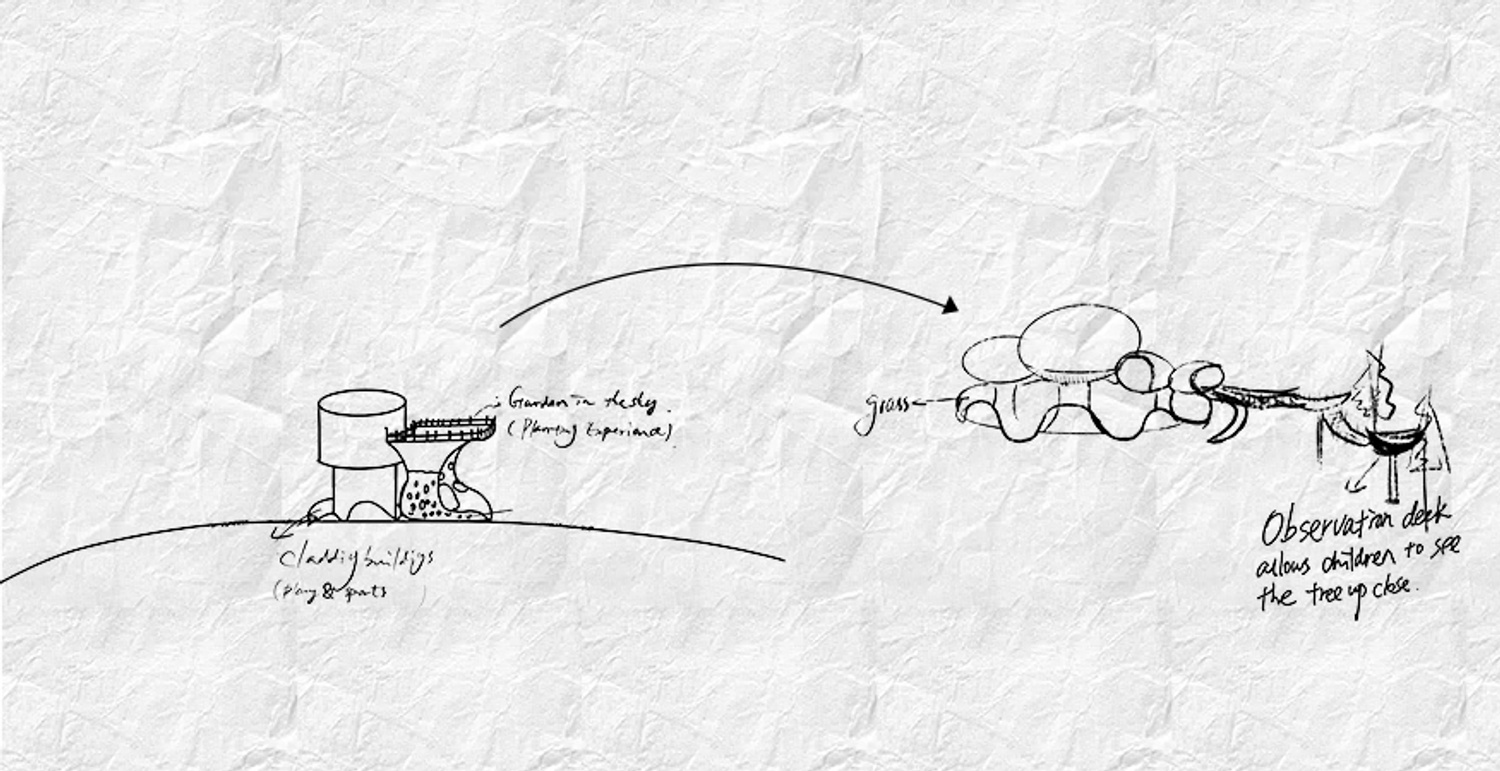
Developed from the theme of exploration, nature movement is at the heart of the design.

Slider image

Design Path

Deepening the design path to a greater integration of architecture and the natural environment.

Slider image

Improve interaction

Try adding corridors to help children interact with movement while observing the natural landscape.

Slider image

Connected Design

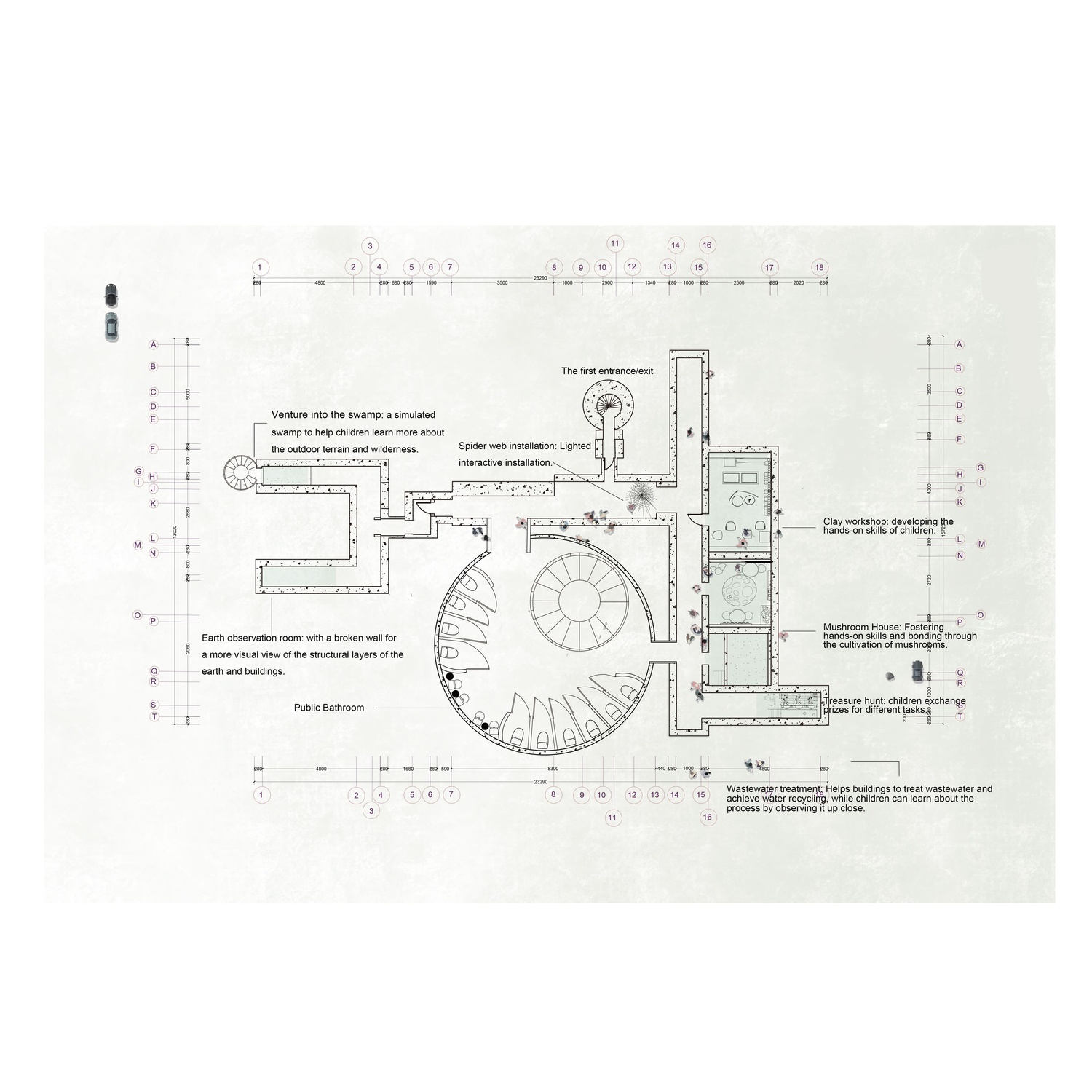
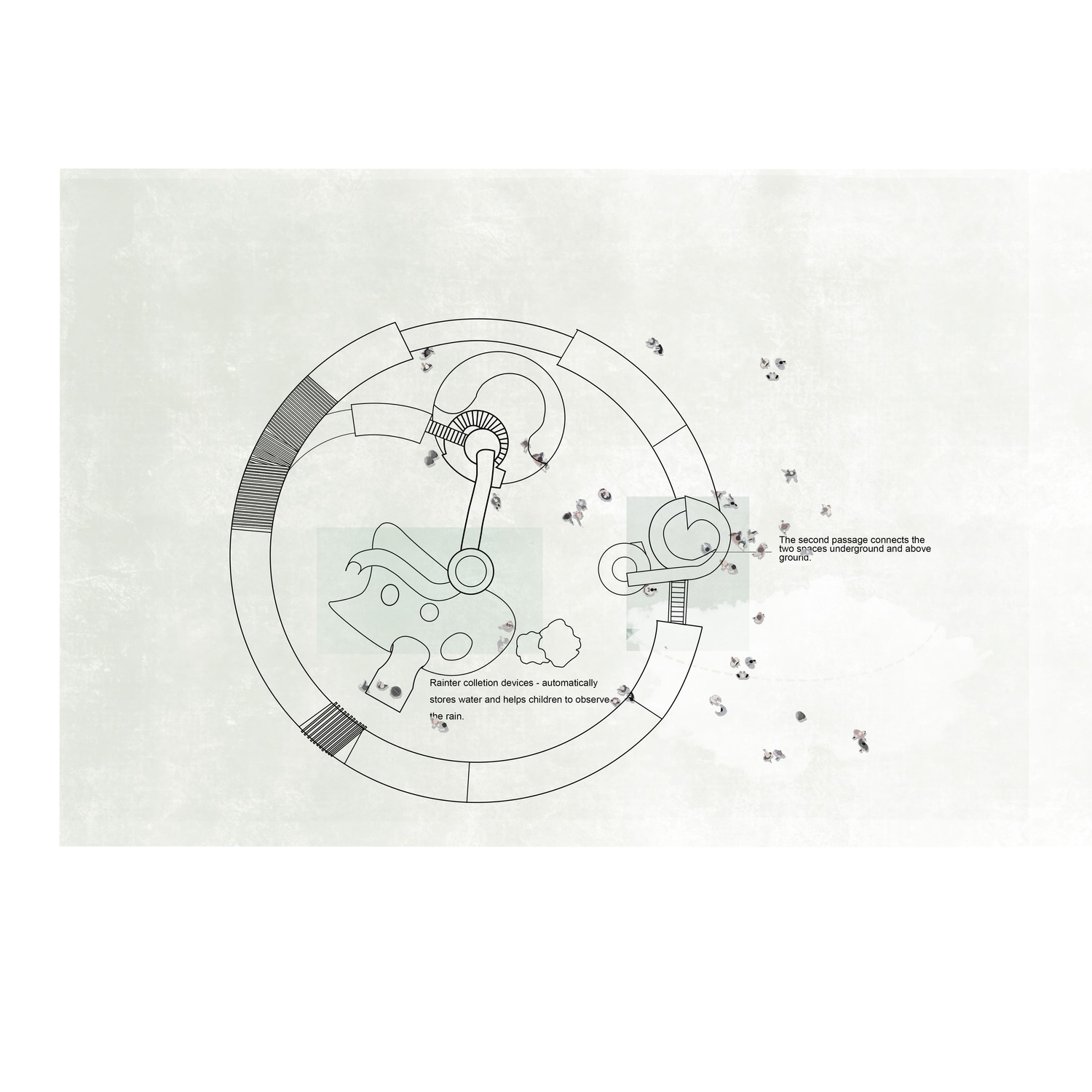
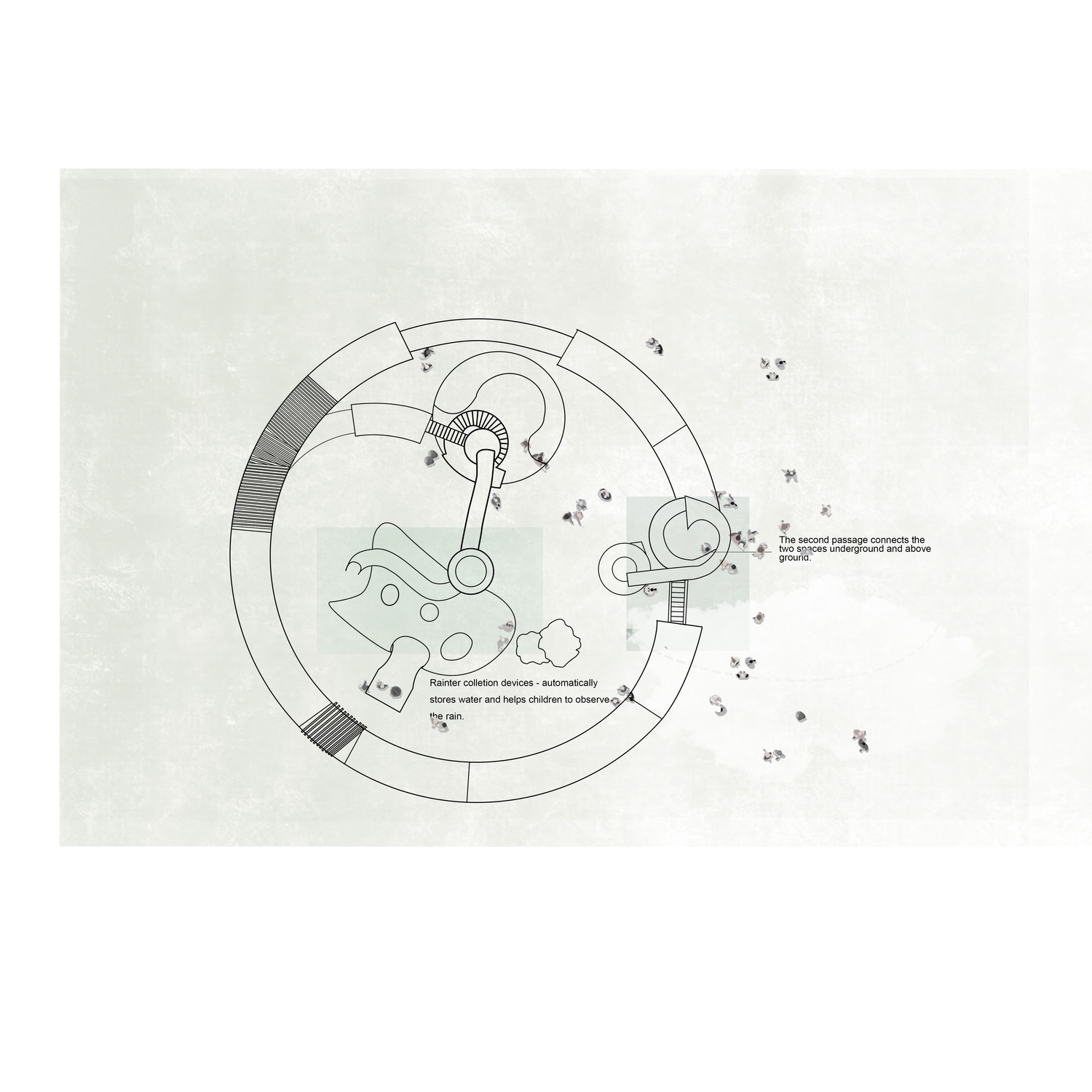
The corridor is better connected to the underground space, making it easier for children and users to move through the different spaces for a better experience.

Step 1 of 4

Final Design Scheme

Abandoned bunker

The use of sustainable design in abandoned bunkers can help children to better understand the scarcity of natural resources and bring them closer to nature. At the same time, the use of sustainable design allows the building to be developed in a way that touches on history and modernity, so that it retains its unique architectural style and has the functional requirements of a new era.

Final Design Proposal

To alleviate the 'nature deficit disorder' of local children, the relationship between children in transition and their parents and peers. The interactive experience is used as a medium to build bridges between children and nature in the city, allowing children to develop good knowledge of nature and promote their social development in a fun and interactive way. New economic values are realised for buildings abandoned for special reasons while preserving their history and culture, thus further exploring the issue of sustainable design of buildings and reducing excessive energy consumption in buildings, linking children, nature and architecture.

General Views

The whole building consists of passageways around the bunker and the corridor with its connecting pipes is a large interactive installation. The children crawl and walk through the corridor while viewing the sky, trees and other natural features. This large installation allows children to experience nature in a better way.

Context, Site analysis, Design Narratives and Concept

Get to know the thorough design development from the stages listed below.

Community Project - Participant’s Installation

Design Narrative

The installation is a light installation where children pull a rope to create light and shadows in the light and stained glass of the installation. Children are the main population in the sustainable community of the abandoned bunker, a community where children are generally distant from nature, and many suffer from 'nature deficit disorder'. The renovated area is also intended to cater to children aged 6-12 years, a group of children in China who are in a transitional period of adolescence, usually Generation Alpha, and who are characterized as being almost only children in their childhood. This group of children is characterized by having been born almost as only children in childhood, while their parents are in Generation Y. They are close to nature and live in groups during their childhood, being skilled at communicating with their peers. In contrast, later Generation Z is generally born as only children with internet access, which makes them prefer solitude and, to a certain extent, hinders their healthy integration into society. Moreover, children between the ages of 6 and 12 are at a point where they are about to develop a sense of independence and may encounter challenges with their parents. The aim of the installation is to help children transitioning into adolescence to learn about nature by experiencing the intricacy of a spider's web, while also promoting communication and cooperation with their parents and peers.

Honours Project - Site Research and Representation

Part I: Research and Analysis

The Central Green Forest Park is located on Jingtang Highway in the south, echoing the administrative office area on the north bank. It is about 6 kilometers away from Beijing Universal Studios and takes about 15-20 minutes by car. It has been essential for the ecological recovery of a site that was a former chemicals factory. From a contaminated industrial estate to a 5.5 sq. km oasis of nature in the heart of Beijing, China. As a sub-center of Beijing, Tongzhou is the new administrative center of the country's capital city. The Beijing Bunker is located in an urban forest park converted from a fossil factory, with three main resources: (i) rich natural resources (diverse vegetation, animals); (ii) a human landscape with a natural focus; and (iii) a large consumer base of children and families. The design around the building is oriented towards sustainability, and I will continue to use this design concept to redesign the building in a way that will appeal to the main population.

Part II: Site Representation

The interlocking air-raid shelter space is a memory of the children when the community was not relocated. The object serves as a connection between children, providing a space through which they can create areas of group interaction that are currently lacking for them to communicate and interact. Its purpose is to raise awareness of the importance of communication between children and to prevent the development of mental illnesses and problems that can hinder their own growth. The architecture of the shelter aims to emphasize the necessity of establishing interaction between individuals at an appropriate distance in order to promote stability. Through various material trials, the shelter's design showcases how different materials can be used in distinct ways to achieve different effects. The inclusion of interactive devices in the interlocking structures assists children in developing better communication and cooperation skills with their peers.

Honours Project

Theoretical Underpinning

Part I: Generation Z and Self Identification

'They have grown up in communities and do not shy away from friendships, nor do they overly desire the need for separate spaces because of their circumstances'

Generation and Self Identification

Generation Y did not have access to the internet as children, they like to live in groups and they like to hang out with their friends. They have grown up in groups and their desire to socialise is reflected in the way they live, play and communicate. They have grown up in communities and do not shy away from friendships, nor do they overly desire the need for separate spaces because of their circumstances. Generation Y have lived in group settings from a very young age and are therefore socially adept at working in groups. In terms of colour, two colours have been chosen; the Gen Y lifestyle is relatively homogeneous in terms of colour palette. But they use different ways to build relationships with different people and they are good at group activities, which can be shown by the use of different materials in the same colour.

Part II:  Pre-generation Z and Self Identification

'......Technology has brought convenience to life on the one hand, and social problems on the other. They have been exposed to all kinds of new things on the Internet since they were young.    '

Family structures among the Generations

Generation Z has grown up in an era of Internet development, where the rapid development of technology has brought convenience to life on the one hand, and social problems on the other. They have been exposed to all kinds of new things on the Internet since they were young. Generation Z is addicted to the Internet and likes to be alone, which is a clear difference from other generations. The use of tangled wire illustrates the solitary nature of Generation Z and their reluctance to socialise too much with the outside world. They have a variety of ways of receiving news from the outside world and have a rich inner world but prefer to be alone.

Part III: Generations and Community

'The two generations are in different contexts, just like a circle gauge that completes a circle for each other.'

The similarities and differences between Gen z and Baby Boomers

Generation Y and Generation Z have both differences and similarities. These two generations have different habits and family structures in different historical contexts, but the development of the internet in both generations has made them encounter the same problems. Generation Z and Generation Y have both similarities and differences. The two generations are in different contexts, just like a circle gauge that completes a circle for each other. The blue line shows that they have different lifestyles but that the internet connects the two generations. A variety of materials are used to show that both generations have their own unique characteristics.

To Explore, Discover, & Regenerate